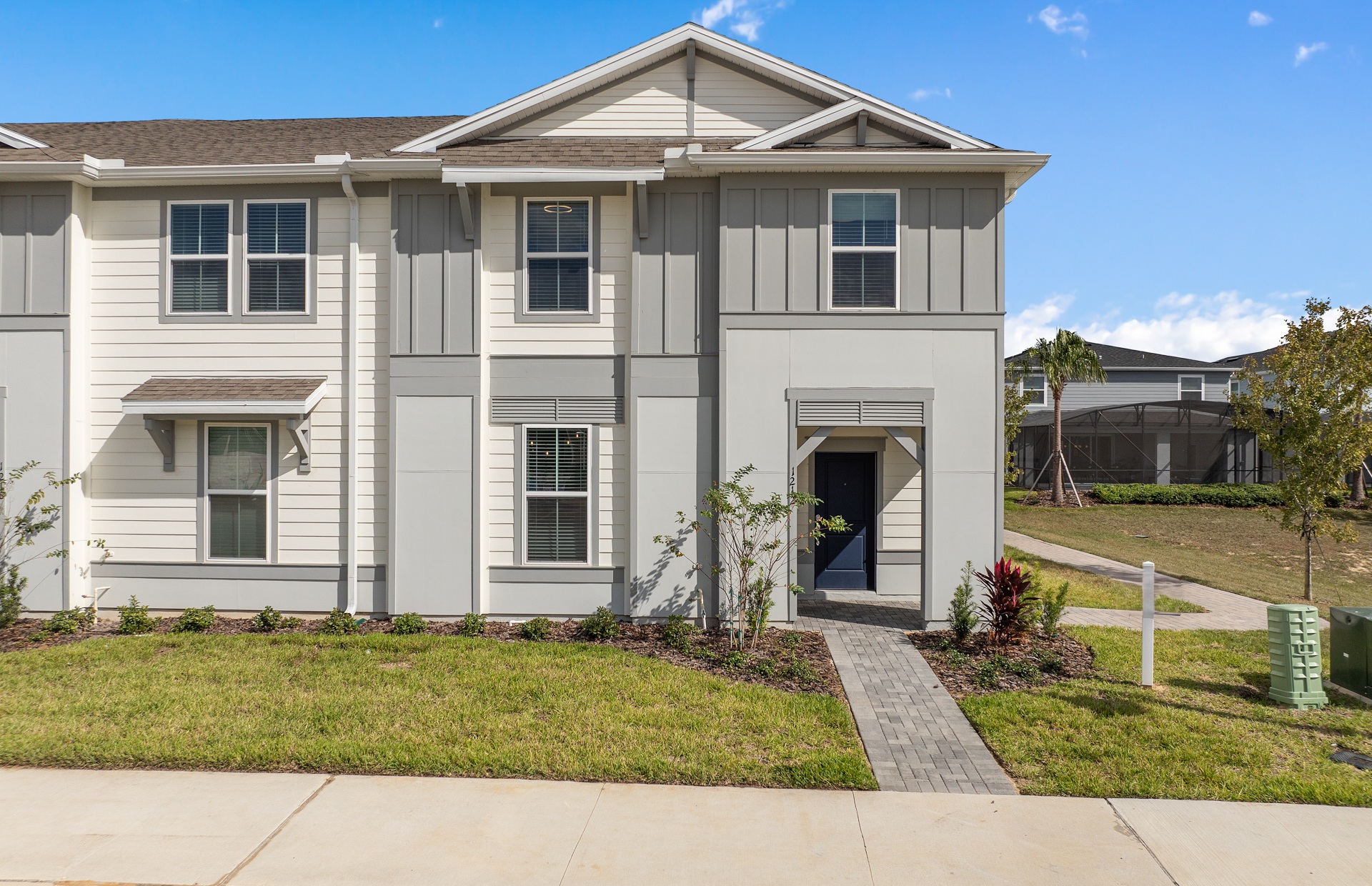
Asset dollarization is the process of holding part of an investor’s wealth in assets whose value, income, or financial obligations are denominated in US dollars.
For an international investor, this may reduce excessive dependence on one local currency, banking system, economy, or geographic market.
Dollarization does not necessarily mean holding physical US currency. An investor can obtain dollar exposure through several types of assets, including:
- US dollar bank deposits;
- US Treasury securities;
- Dollar-denominated bonds;
- US equities;
- Publicly traded real estate investment trusts;
- Direct ownership of US real estate;
- Businesses or investment funds operating in dollars.
US real estate is one possible dollarization instrument because the property is purchased, valued, rented, financed, and eventually sold primarily in US dollars.
However, property ownership does not guarantee protection from inflation, currency depreciation, declining real estate values, vacancy, taxes, insurance increases, or financial loss.
This guide explains what asset dollarization is and how US real estate may support an international wealth strategy, including the potential benefits, limitations, taxes, ownership structures, operating requirements, and risks.
Quick answer: Asset dollarization through US real estate means allocating part of an investor’s wealth to property valued in US dollars. The strategy may provide rental income in dollars, ownership of a physical asset, potential appreciation, and geographic diversification. It also creates property, currency, tax, liquidity, financing, insurance, and management risks that must be evaluated before investing.
What Is Asset Dollarization?
Asset dollarization is a portfolio strategy rather than one standardized legal or financial product.
It generally involves converting or allocating part of an investor’s capital into assets whose market value or income is expressed in US dollars.
The objective may be to:
- Reduce concentration in the investor’s home currency;
- Receive part of the investor’s income in dollars;
- Hold assets in more than one country;
- Diversify economic and political exposure;
- Preserve access to international purchasing power;
- Build a long-term international portfolio;
- Match future expenses that will be paid in dollars.
Asset dollarization should not be confused with a promise that the dollar will always increase in value.
The dollar can strengthen or weaken against other currencies, and dollar-denominated investments can lose value.
Asset Dollarization Is Different From Currency Speculation
Currency speculation usually involves attempting to profit from short-term movements in exchange rates.
Asset dollarization is generally a longer-term allocation decision.
The investor is not necessarily trying to predict the exchange rate next week or next month. Instead, the investor is deciding whether part of a portfolio should be held in assets connected to a different currency and economy.
| Factor | Asset Dollarization | Currency Speculation |
|---|---|---|
| Primary objective | Long-term diversification and wealth planning | Profit from exchange-rate movements |
| Typical horizon | Several years or longer | May be short-term |
| Underlying asset | Property, securities, deposits, or businesses | Currency or currency-linked instrument |
| Income potential | May produce rent, interest, or dividends | Generally depends on currency movement |
| Main risks | Asset, currency, tax, market, and liquidity risks | Currency volatility and leverage risk |
Dollarization Is Not Tax Evasion or Capital Flight
A lawful international investment should involve:
- Documented source of funds;
- Transfers through regulated financial institutions;
- Compliance with US laws;
- Compliance with the investor’s home-country laws;
- Required tax declarations;
- Foreign asset and entity reporting when applicable;
- Accurate reporting of rental income and capital gains.
Purchasing an asset abroad does not remove tax or reporting obligations.
International investors should avoid any professional or promoter who recommends:
- Hiding beneficial ownership;
- Using false documents;
- Misrepresenting the source of funds;
- Failing to report foreign assets;
- Transferring money outside regulated channels;
- Using an entity solely to conceal ownership.
A responsible dollarization strategy is transparent, documented, and compliant in every relevant jurisdiction.
Why the US Dollar Is Important Internationally
The US dollar continues to play a central role in the international financial system.
The International Monetary Fund reported that the dollar represented 57.13% of identified official foreign exchange reserves during the first quarter of 2026.
The Federal Reserve also states that the dollar remains the most widely used currency for:
- Foreign exchange transactions;
- Cross-border payments;
- Official foreign exchange reserves;
- International debt securities;
- International loans.
Review the official IMF Currency Composition of Official Foreign Exchange Reserves report.
Additional analysis is available in the Federal Reserve’s International Role of the US Dollar report.
The dollar’s international role does not mean it is free from inflation, interest-rate changes, fiscal risks, political developments, or exchange-rate volatility.
Why International Investors Consider Dollarization
1. Home-Currency Concentration
An investor whose income, business, savings, bank accounts, and properties are all connected to one currency has significant concentration in that currency.
If the currency weakens internationally, the investor’s global purchasing power may decline even when the nominal value of local assets increases.
2. Domestic Inflation
Inflation can reduce the purchasing power of cash and fixed-income assets when their return remains below the rate at which prices increase.
Dollar-denominated property does not eliminate inflation risk, but it may diversify the investor’s exposure to inflation and monetary conditions in the home country.
3. Geographic Diversification
Holding property in more than one country may reduce dependence on one local economy, property market, banking system, or political environment.
Diversification cannot guarantee protection from losses.
Investor.gov describes diversification as spreading money among different investments to reduce concentration risk, while emphasizing that it cannot prevent every investment from declining.
Review the official Investor.gov diversification guide.
4. Future Dollar Expenses
An investor may expect future expenses involving:
- Education in the United States;
- International travel;
- Property ownership;
- Business expansion;
- Healthcare;
- Family support;
- Retirement or relocation.
Holding assets that produce dollar income can create a partial match between the investor’s assets and future dollar expenses.
5. International Income
A US rental property may produce rent in dollars.
This income can potentially be used to pay:
- US property taxes;
- Insurance;
- Property management;
- Maintenance;
- Association fees;
- Mortgage payments;
- Other dollar-denominated expenses.
Receiving dollars does not mean the property is profitable. Income must be compared with all ownership expenses.
Ways to Dollarize Assets
US Dollar Bank Deposits
Dollar deposits may provide:
- Liquidity;
- Simpler access to dollars;
- Potential interest income;
- Funds for future US expenses.
Risks and limitations may include:
- Interest below inflation;
- Bank and account restrictions;
- Deposit insurance limitations;
- Fees;
- No property appreciation;
- Currency movement against the investor.
US Treasury Securities
US Treasury securities include bills, notes, bonds, and inflation-protected securities issued by the US Department of the Treasury.
They may provide dollar exposure and interest income without property-management responsibilities.
They remain subject to:
- Interest-rate risk;
- Market-price fluctuations when sold before maturity;
- Inflation risk for nominal securities;
- Tax and custody considerations;
- Currency risk for international investors.
US Equities
Shares of US companies may provide:
- Dollar-denominated market exposure;
- Potential capital appreciation;
- Potential dividend income;
- Greater liquidity than direct property.
Equities may experience significant daily volatility and can lose value.
Publicly Traded REITs
A real estate investment trust, or REIT, generally owns or finances income-producing real estate.
Publicly traded REIT shares may provide:
- Exposure to real estate;
- Professional asset management;
- Potential diversification across several properties;
- Greater liquidity than direct property;
- Potential dividend distributions.
A REIT share is a security rather than direct ownership of an individual property.
Direct US Real Estate
Direct real estate ownership may provide:
- Control over a specific property;
- Potential rental income;
- Potential appreciation;
- Mortgage principal reduction;
- Ability to select management and financing;
- A physical dollar-denominated asset.
It also involves:
- High acquisition capital;
- Low liquidity;
- Property taxes;
- Insurance;
- Maintenance;
- Vacancy;
- Property management;
- Legal and tax compliance;
- Future sale expenses.
Comparison of Dollarization Instruments
| Instrument | Potential Income | Liquidity | Direct Control | Physical Asset |
|---|---|---|---|---|
| Dollar bank deposit | Interest | Generally high | Account control | No |
| US Treasury security | Interest | Generally high | Limited to investment decision | No |
| US equity | Dividends and appreciation | Generally high | No operational control | No |
| Publicly traded REIT | Distributions and appreciation | Generally high | No property-level control | Indirect exposure |
| Direct US property | Rent and potential appreciation | Low | Higher | Yes |
The appropriate instrument depends on the investor’s objective, capital, risk tolerance, liquidity needs, tax position, and investment horizon.
How US Real Estate Supports Asset Dollarization
Mechanism 1: Property Value Is Expressed in Dollars
A US property’s:
- Purchase price;
- Market value;
- Mortgage balance;
- Rental income;
- Property expenses;
- Future sale price
are generally expressed in US dollars.
This creates direct dollar exposure, but it does not guarantee that the property’s dollar value will increase.
Mechanism 2: Rental Income May Be Received in Dollars
Long-term, medium-term, and short-term rentals generally collect rent or reservation income in US dollars.
The investor may retain that income in the United States, use it for property expenses, reinvest it, or transfer eligible funds internationally.
Net dollar income is calculated only after expenses are deducted.
Mechanism 3: Ownership of a Physical Asset
Direct property ownership provides an interest in land and improvements rather than only a currency balance or financial security.
The physical property may have value based on:
- Location;
- Land;
- Building replacement cost;
- Rental demand;
- Property condition;
- Neighborhood development;
- Resale demand.
Physical ownership also creates maintenance, insurance, environmental, legal, and natural-disaster risks.
Mechanism 4: Potential Long-Term Appreciation
Property values may rise over time because of:
- Population growth;
- Household formation;
- Employment growth;
- Limited housing supply;
- Infrastructure;
- Land scarcity;
- Construction and replacement costs;
- Neighborhood improvements.
Appreciation is not guaranteed.
The Federal Housing Finance Agency reported that US house prices increased 1.7% between the first quarter of 2025 and the first quarter of 2026.
The agency also reported that prices increased in 42 states but declined in eight states and the District of Columbia, demonstrating that property performance varies by location.
Review the official FHFA House Price Index report.
Mechanism 5: Fixed-Rate Financing
When available, fixed-rate financing may allow the principal-and-interest payment to remain stable while rent and property values change.
This can support long-term planning, but the property’s complete monthly costs may still increase because of:
- Insurance;
- Property taxes;
- Association fees;
- Maintenance;
- Utilities;
- Property management.
Leverage can increase both gains and losses.
Mechanism 6: Mortgage Principal Reduction
With an amortizing mortgage, part of the scheduled payment may reduce the principal balance.
When rental income supports debt service, the property may build investor equity through a combination of:
- Principal reduction;
- Potential appreciation;
- Capital improvements;
- Additional owner contributions.
Equity is not the same as liquid cash. Access generally requires a sale, refinance, or another financing transaction.
Currency Example
Assume an investor owns a US property producing $18,000 in annual net rental income.
At an exchange rate of four home-currency units for each US dollar:
$18,000 × 4 = 72,000 home-currency units
If the home currency later weakens to five units for each dollar:
$18,000 × 5 = 90,000 home-currency units
The dollar income did not increase, but its local-currency equivalent increased.
If the home currency strengthens to three units for each dollar:
$18,000 × 3 = 54,000 home-currency units
The same dollar income would then have a lower local-currency value.
This example demonstrates that currency movements can improve or reduce the investor’s results when measured in the home currency.
Dollar Income Is Not Automatically Profit
A property may generate substantial gross rent but limited or negative net income after expenses.
Potential property expenses include:
- Vacancy;
- Property management;
- Property taxes;
- Insurance;
- Homeowners association fees;
- Maintenance;
- Repairs;
- Utilities;
- Cleaning;
- Landscaping;
- Mortgage payments;
- Accounting and legal services;
- Licenses and rental taxes;
- Capital replacement reserves.
Illustrative Rental Analysis
| Category | Illustrative Annual Amount |
|---|---|
| Gross rental income | $42,000 |
| Vacancy allowance | -$2,100 |
| Property management | -$4,200 |
| Property taxes | -$6,000 |
| Insurance | -$4,500 |
| Association fees | -$2,400 |
| Maintenance and reserves | -$4,000 |
| Illustrative net operating income | $18,800 |
Mortgage payments, income taxes, capital improvements, and investor-specific costs would then need to be considered.
This example is educational and does not represent expected performance for a particular property.
Important Investment Metrics
Gross Rental Yield
Gross Rental Yield = Annual Gross Rent ÷ Purchase Price × 100
This calculation excludes property expenses.
Net Operating Income
Net Operating Income = Gross Operating Income − Operating Expenses
NOI is generally calculated before mortgage principal and interest, income taxes, and certain capital expenses.
Capitalization Rate
Capitalization Rate = Net Operating Income ÷ Property Value × 100
Pre-Tax Cash Flow
Pre-Tax Cash Flow = Net Operating Income − Financing Payments
Cash-on-Cash Return
Cash-on-Cash Return = Annual Pre-Tax Cash Flow ÷ Total Cash Invested × 100
Currency-Adjusted Return
An international investor may also calculate performance in the home currency.
The analysis should include:
- Original exchange rate when capital was transferred;
- Dollar income received;
- Current exchange rate;
- International transfer fees;
- Taxes in both countries;
- Current dollar value of the property;
- Estimated sale costs.
Choosing a US Real Estate Market
A market should not be selected only because it is famous among international buyers.
Investors should evaluate:
- Population and household trends;
- Employment sectors;
- Household income;
- Rental vacancy;
- Market rent;
- Housing supply;
- Construction activity;
- Property taxes;
- Insurance conditions;
- Rental regulations;
- Property-management availability;
- Resale demand.
Income-Focused Markets
An income-focused investor should compare:
- Rent relative to property price;
- Stable tenant demand;
- Vacancy;
- Property taxes;
- Insurance;
- Association expenses;
- Management costs;
- Future housing supply.
Appreciation-Focused Markets
An appreciation-focused investor may prioritize:
- Premium location;
- Limited supply;
- International recognition;
- Infrastructure investment;
- High-income employment;
- Long-term resale demand.
Higher-priced markets may produce lower current rental yields.
Balanced Markets
A balanced strategy attempts to combine reasonable rental income with long-term resale potential.
The property may not produce the highest yield or be located in the most recognized market, but it may provide a more sustainable relationship between price, income, expenses, and expected demand.
Choosing the Rental Strategy
Long-Term Rental
A long-term rental may provide more predictable monthly income and lower operational intensity.
Potential risks include tenant nonpayment, vacancy, maintenance, legal procedures, and rent remaining fixed during the lease term.
Short-Term Rental
A short-term rental may allow frequent price adjustments and potentially higher gross revenue.
It generally creates higher expenses involving:
- Property management;
- Cleaning;
- Utilities;
- Furniture;
- Guest supplies;
- Platform fees;
- Licensing;
- Sales and lodging taxes;
- Insurance.
Permission must be verified for the specific property address.
Medium-Term Rental
A medium-term furnished rental may serve traveling professionals, relocating families, seasonal residents, students, or temporary occupants.
It can involve less turnover than nightly rentals but more operating responsibilities than an unfurnished annual lease.
How Much of a Portfolio Should Be Dollarized?
There is no universal percentage that is appropriate for every investor.
The decision depends on:
- Total net worth;
- Current currency exposure;
- Home-country income;
- Future dollar expenses;
- Available liquidity;
- Debt obligations;
- Investment horizon;
- Risk tolerance;
- Tax position;
- Family and estate-planning objectives.
An investor should avoid committing emergency reserves or short-term funds to an illiquid property.
The allocation decision should be evaluated with qualified financial, legal, and tax professionals who understand both countries.
Asset Dollarization Does Not Require Direct Property Ownership
An investor who does not have sufficient capital, liquidity, or management capacity for direct ownership may compare:
- Publicly traded REITs;
- Real estate funds;
- Fractional real estate offerings;
- US Treasury securities;
- Dollar-denominated savings or investments.
Each structure has different ownership rights, liquidity, fees, regulations, taxation, and risk.
A fractional property interest or REIT share should not automatically be described as equivalent to direct ownership of a property.
Cash Purchase or Financing?
Cash Purchase
Potential advantages include:
- No mortgage qualification;
- No monthly debt payment;
- No loan interest;
- Potentially faster closing;
- Fewer lender-required documents.
Potential disadvantages include:
- Greater capital concentration;
- Reduced liquidity;
- Less capital available for diversification;
- Opportunity cost of using the complete amount in one property.
Financed Purchase
Potential advantages include:
- Preserving part of the investor’s capital;
- Maintaining additional liquidity;
- Potential ability to diversify across more than one asset;
- Potentially increasing return on invested cash when performance is strong.
Potential risks include:
- Interest and lender fees;
- Monthly payments during vacancy;
- Prepayment penalties;
- Balloon payments;
- Refinancing risk;
- Required reserves;
- Potential foreclosure;
- Greater losses when the property underperforms.
Ownership Structure
A foreign investor may potentially acquire US property:
- In an individual name;
- Through a single-member LLC;
- Through a multimember LLC;
- Through a partnership;
- Through a corporation;
- Through a trust or another planning structure.
No structure is automatically appropriate for every investor.
The decision may affect:
- Liability;
- Financing;
- Federal tax classification;
- Annual reporting;
- Administrative costs;
- Estate and succession planning;
- FIRPTA;
- Home-country reporting.
An LLC Is Not an Automatic Tax Solution
An LLC does not automatically:
- Reduce federal income tax;
- Eliminate personal liability;
- Avoid FIRPTA;
- Prevent estate-tax exposure;
- Guarantee mortgage eligibility;
- Remove annual filing obligations;
- Eliminate home-country reporting.
The structure should be reviewed before the purchase contract is signed.
US Federal Tax on Rental Income
Rental income from US real estate can create federal tax and filing obligations for international investors.
The IRS states that income from US real property owned by a nonresident alien is generally taxed at 30%, or a lower treaty rate, when it is not effectively connected with a US trade or business.
This default treatment may apply to gross income without expense deductions.
A qualifying nonresident owner may elect under Internal Revenue Code Section 871(d) to treat the rental income as effectively connected income.
When a valid election and filing apply, eligible expenses may generally be deducted before federal income tax is calculated.
Review the official IRS guidance for nonresident owners of US real property.
Potential Rental Expenses
Depending on the investor, property, documentation, and tax treatment, potential expenses may include:
- Property management;
- Mortgage interest;
- Property taxes;
- Insurance;
- Association fees;
- Repairs;
- Utilities paid by the owner;
- Advertising;
- Accounting and legal expenses;
- Depreciation.
IRS Publication 527 provides guidance regarding residential rental income, expenses, personal use, and depreciation.
Review the official IRS Publication 527, Residential Rental Property.
FIRPTA When the Property Is Sold
FIRPTA means the Foreign Investment in Real Property Tax Act.
When a foreign person disposes of a US real property interest, withholding may apply to the amount realized.
The general FIRPTA withholding rate is commonly 15% of the amount realized, subject to exceptions and specialized procedures.
The amount realized generally includes:
- Cash paid;
- The value of other property transferred;
- Liabilities assumed by the buyer;
- Liabilities to which the property remains subject.
FIRPTA withholding is not necessarily the investor’s final federal tax liability.
The seller generally reports the transaction, calculates the applicable tax, and claims credit for the amount withheld.
Review the official IRS FIRPTA Withholding guidance.
Estate and Succession Risks
Foreign investors should address what happens to the property if the owner dies or becomes incapacitated.
Important considerations include:
- US estate-tax exposure;
- Available treaty benefits;
- Probate;
- Transfer of an LLC interest;
- Mortgage obligations;
- Beneficiaries living outside the United States;
- Home-country inheritance rules;
- Continuity of property management.
The IRS states that certain estates of nonresident noncitizens with US-situated assets may be required to file a US estate-tax return.
Review the official IRS estate-tax guidance for nonresidents.
Estate planning should generally be reviewed before purchasing because transferring the property later may create tax, title, financing, or gift consequences.
Home-Country Tax and Reporting
The investor’s country of tax residence may require reporting of:
- US property ownership;
- Ownership of a US entity;
- Foreign bank accounts;
- Rental income;
- Capital gains;
- International transfers;
- Foreign taxes paid or withheld;
- Inheritance or gifts.
Foreign tax credits, treaty relief, exemptions, and reporting thresholds vary by country and investor.
A US tax professional should coordinate with a qualified professional in the investor’s country of residence.
Liquidity Risk
Direct property is generally less liquid than cash, publicly traded shares, or Treasury securities.
Selling may require:
- Property preparation;
- Marketing;
- Buyer negotiations;
- Inspection;
- Title work;
- Financing approval by the buyer;
- Closing;
- FIRPTA procedures.
The process can take weeks or months, and a sale at the desired price is not guaranteed.
Investors should not commit funds that may be needed immediately.
Property and Market Risk
A US property may lose value because of:
- Economic recession;
- Population decline;
- Employment losses;
- Excess housing supply;
- High interest rates;
- Insurance problems;
- Natural disasters;
- Property deterioration;
- Neighborhood decline;
- Regulatory changes;
- Overpaying at acquisition.
The fact that an asset is denominated in dollars does not prevent it from declining in dollar value.
Rental-Income Risk
Rental income can be affected by:
- Vacancy;
- Tenant nonpayment;
- Seasonality;
- Competition;
- Property condition;
- Management quality;
- Local wages;
- Tourism demand;
- Short-term rental restrictions;
- Economic conditions.
Rental projections supplied by a seller, developer, platform, or property manager should be independently verified.
Insurance and Natural-Disaster Risk
Depending on the state and property, the investor may need to evaluate:
- Hurricanes;
- Flooding;
- Wildfires;
- Tornadoes;
- Earthquakes;
- Winter storms;
- Insurance deductibles;
- Coverage exclusions;
- Loss-of-rent coverage;
- Insurance availability.
An insurance quote should be obtained during the property’s due-diligence period.
Currency Risk
The dollar may weaken against the investor’s home currency.
This can reduce:
- The home-currency value of rental income;
- The home-currency value of the property;
- The result when sale proceeds are converted;
- The perceived return measured in the investor’s domestic currency.
A dollarization strategy should therefore be understood as diversification—not a guaranteed currency profit.
How to Build a Responsible Asset Dollarization Strategy
Step 1: Measure Current Concentration
Identify how much of the investor’s wealth is connected to:
- One currency;
- One country;
- One bank;
- One business;
- One real estate market;
- One source of income.
Step 2: Define the Objective
Determine whether the objective is:
- Dollar income;
- Geographic diversification;
- Future dollar expenses;
- Long-term appreciation;
- Capital preservation;
- Personal use;
- A combination of these goals.
Step 3: Preserve Emergency Liquidity
Maintain sufficient liquid capital before purchasing an illiquid property.
Step 4: Establish the Complete Budget
Include:
- Purchase price or down payment;
- Closing costs;
- Financing fees;
- Inspection;
- Insurance;
- Repairs;
- Furniture;
- Entity and legal expenses;
- Currency-transfer fees;
- Operating reserves.
Step 5: Compare Dollarization Instruments
Compare property ownership with:
- Dollar deposits;
- Treasury securities;
- Public equities;
- REITs;
- Funds;
- Fractional property investments.
Step 6: Select the Market and Property
Use local data involving rent, employment, population, housing supply, property taxes, insurance, regulation, and resale demand.
Step 7: Calculate Net Performance
Include every realistic property expense and financing obligation.
Step 8: Stress-Test the Investment
Calculate scenarios involving:
- Rent 10% below projection;
- Several months of vacancy;
- Higher insurance;
- Higher property taxes;
- A major repair;
- No appreciation;
- A weaker dollar;
- A lower future sale price.
Step 9: Review Ownership and Taxes
Coordinate qualified US and home-country legal and tax professionals before signing the purchase contract.
Step 10: Establish Local Management
Create a system for:
- Rent collection;
- Tenant or guest communication;
- Maintenance;
- Inspections;
- Insurance claims;
- Licenses;
- Accounting;
- Emergency response.
Step 11: Define the Exit
Establish:
- Expected holding period;
- Potential future buyer;
- Estimated sale costs;
- FIRPTA procedure;
- Tax consequences;
- Currency-conversion strategy;
- Conditions that could justify selling.
Annual Dollarization Review
The investor should review:
- Current property value in dollars;
- Current property value in the home currency;
- Gross rental income;
- Operating expenses;
- Net operating income;
- Cash flow;
- Mortgage principal reduction;
- Exchange-rate changes;
- Insurance and property-tax increases;
- Property condition;
- Estimated sale expenses;
- US and home-country taxes;
- Current portfolio concentration.
The property’s dollar value alone does not provide a complete measure of investment success.
Common Asset Dollarization Mistakes
- Assuming the dollar always strengthens;
- Believing that any dollar-denominated asset is automatically safe;
- Purchasing property based only on currency fear;
- Investing all available capital in one property;
- Using emergency reserves for an illiquid investment;
- Confusing gross rent with profit;
- Ignoring property taxes, insurance, and maintenance;
- Assuming property values always rise;
- Choosing a market based only on popularity;
- Relying on guaranteed rental or appreciation claims;
- Creating an LLC without tax analysis;
- Ignoring home-country reporting;
- Failing to document the source of funds;
- Transferring money outside regulated channels;
- Ignoring FIRPTA until the property is sold;
- Failing to create an estate and succession plan;
- Sending money using unverified wire instructions.
Asset Dollarization Checklist
- Measure concentration: identify exposure to one currency, country, and economy.
- Define the purpose: income, diversification, future expenses, or capital preservation.
- Preserve liquidity: maintain emergency and short-term reserves.
- Compare instruments: evaluate property, Treasury securities, REITs, equities, and dollar deposits.
- Establish complete capital: include closing, repairs, management, and reserves.
- Select a market: use economic, rental, insurance, tax, and supply data.
- Analyze the property: calculate net income rather than gross rent.
- Stress-test the investment: model lower income, higher expenses, and currency changes.
- Review the ownership structure: obtain legal and tax advice before purchase.
- Document the source of funds: use regulated financial channels.
- Organize remote management: establish reporting, maintenance, and emergency procedures.
- Address tax compliance: review US and home-country filings.
- Plan succession: establish how the property or entity interest will transfer.
- Define the exit: estimate sale costs, FIRPTA, taxes, and currency conversion.
- Review annually: measure the property within the complete international portfolio.
Frequently Asked Questions
What is asset dollarization in simple terms?
Asset dollarization means holding part of an investor’s wealth in assets whose value or income is expressed in US dollars.
Does dollarization mean holding physical dollars?
No. Dollar exposure may be obtained through bank deposits, Treasury securities, equities, REITs, funds, businesses, or US real estate.
Is asset dollarization legal?
International investment can be legal when it complies with US law, home-country law, tax reporting, source-of-funds rules, sanctions, and applicable capital-transfer requirements.
Is dollarization the same as hiding money abroad?
No. A compliant strategy uses documented funds, regulated financial institutions, transparent ownership, and required tax reporting.
Why use US real estate for dollarization?
US property is generally valued, rented, financed, and sold in dollars. It may provide rental income, physical asset ownership, potential appreciation, and geographic diversification.
Does US real estate guarantee protection from currency devaluation?
No. The property can decline in dollar value, produce negative cash flow, or be affected by a weaker dollar relative to the investor’s home currency.
Does the dollar always increase against emerging-market currencies?
No. Exchange rates move in both directions. Past currency movements do not guarantee future performance.
Is real estate safer than keeping dollars in a bank?
The risks are different. Bank deposits generally provide greater liquidity, while direct property may offer rental income and appreciation but creates operating, market, tax, and liquidity risks.
Is real estate better than US Treasury securities?
Neither is universally better. Treasury securities provide interest and greater liquidity without property management. Real estate may provide rent, control, and potential appreciation but involves more expenses and risk.
Can a foreign investor obtain a US mortgage?
Some lenders offer foreign national, DSCR, portfolio, and business-purpose financing. Eligibility, rates, fees, down payments, reserves, and documentation vary.
Should the property be purchased through an LLC?
An LLC may provide legal or administrative benefits in some circumstances, but it is not automatically the best structure and can create tax, reporting, financing, and annual compliance obligations.
Do foreign investors pay US tax on rental income?
Yes. US real estate income can create federal tax and filing obligations. The treatment depends on tax residency, ownership structure, elections, income, expenses, and applicable treaties.
What happens when the foreign owner sells?
FIRPTA withholding may apply to the amount realized. The seller generally files the applicable federal tax return to calculate the final tax and claim credit for withholding.
Can rental income be transferred to another country?
Eligible funds may generally be transferred through regulated financial institutions, subject to banking procedures, taxes, documentation, and laws in both countries.
How much of a portfolio should be dollarized?
There is no universal percentage. The decision depends on liquidity, objectives, current currency exposure, future dollar expenses, risk tolerance, tax circumstances, and investment horizon.
What is the greatest risk of dollarization through real estate?
A major risk is concentrating substantial capital in an illiquid property that produces less income, requires more expenses, or sells for less than expected.
Use Dollarization as Diversification, Not as a Guarantee
Asset dollarization can help an international investor reduce excessive dependence on one currency, economy, and property market.
US real estate may support this strategy by providing a physical asset valued in dollars, potential rental income, possible appreciation, and long-term geographic diversification.
These characteristics do not make every US property a suitable investment.
A responsible strategy requires complete financial analysis, independent due diligence, appropriate reserves, qualified management, legal and tax compliance, currency-risk analysis, and a clear exit plan.
Buldora helps international investors compare US real estate opportunities, understand dollar-denominated investment structures, evaluate properties through complete financial scenarios, and coordinate the process with qualified real estate, lending, legal, tax, insurance, and property-management professionals.
Start your asset dollarization and US real estate analysis with Buldora
About the Author
Raphaela Banks is Co-Founder and Global Real Estate Strategist at Buldora Invest. She develops strategies and educational content to help international investors understand real estate opportunities in the United States, Brazil, and Dubai.
Sources & References
This article was researched using original government publications, official financial education resources, federal tax guidance, and primary economic and property-market data. Currency rates, property prices, rental income, taxes, financing, insurance, and regulations may change after publication.
- International Monetary Fund — Currency Composition of Official Foreign Exchange Reserves, First Quarter 2026
- International Monetary Fund — COFER Dataset
- International Monetary Fund — Global Foreign Exchange Reserves Dashboard
- Federal Reserve Board — The International Role of the US Dollar, 2025 Edition
- Federal Reserve Board — International Roles of the US Dollar, 2026 Conference Summary
- US Department of the Treasury — Treasury International Capital System
- US Department of the Treasury — Foreign Holdings of US Securities
- Federal Housing Finance Agency — US House Price Index, First Quarter 2026
- Federal Housing Finance Agency — House Price Index Data
- US Securities and Exchange Commission, Investor.gov — Diversify Your Investments
- US Securities and Exchange Commission, Investor.gov — Real Estate Investment Trusts
- Internal Revenue Service — Nonresident Aliens: Real Property Located in the United States
- Internal Revenue Service — Publication 519, US Tax Guide for Aliens
- Internal Revenue Service — Publication 527, Residential Rental Property
- Internal Revenue Service — FIRPTA Withholding
- Internal Revenue Service — Reporting and Paying Tax on US Real Property Interests
- Internal Revenue Service — Estate-Tax Filing for Certain Nonresidents With US Assets
This article is provided for general informational and educational purposes only. It does not constitute legal, tax, accounting, securities, currency, lending, immigration, insurance, financial, property-management, or investment advice. Asset dollarization does not guarantee protection from inflation, currency depreciation, declining property values, vacancy, unexpected expenses, taxation, or financial loss. Laws and reporting requirements vary by investor, country, ownership structure, property, and transaction. International investors should consult qualified US and home-country professionals before transferring capital or making an investment decision.