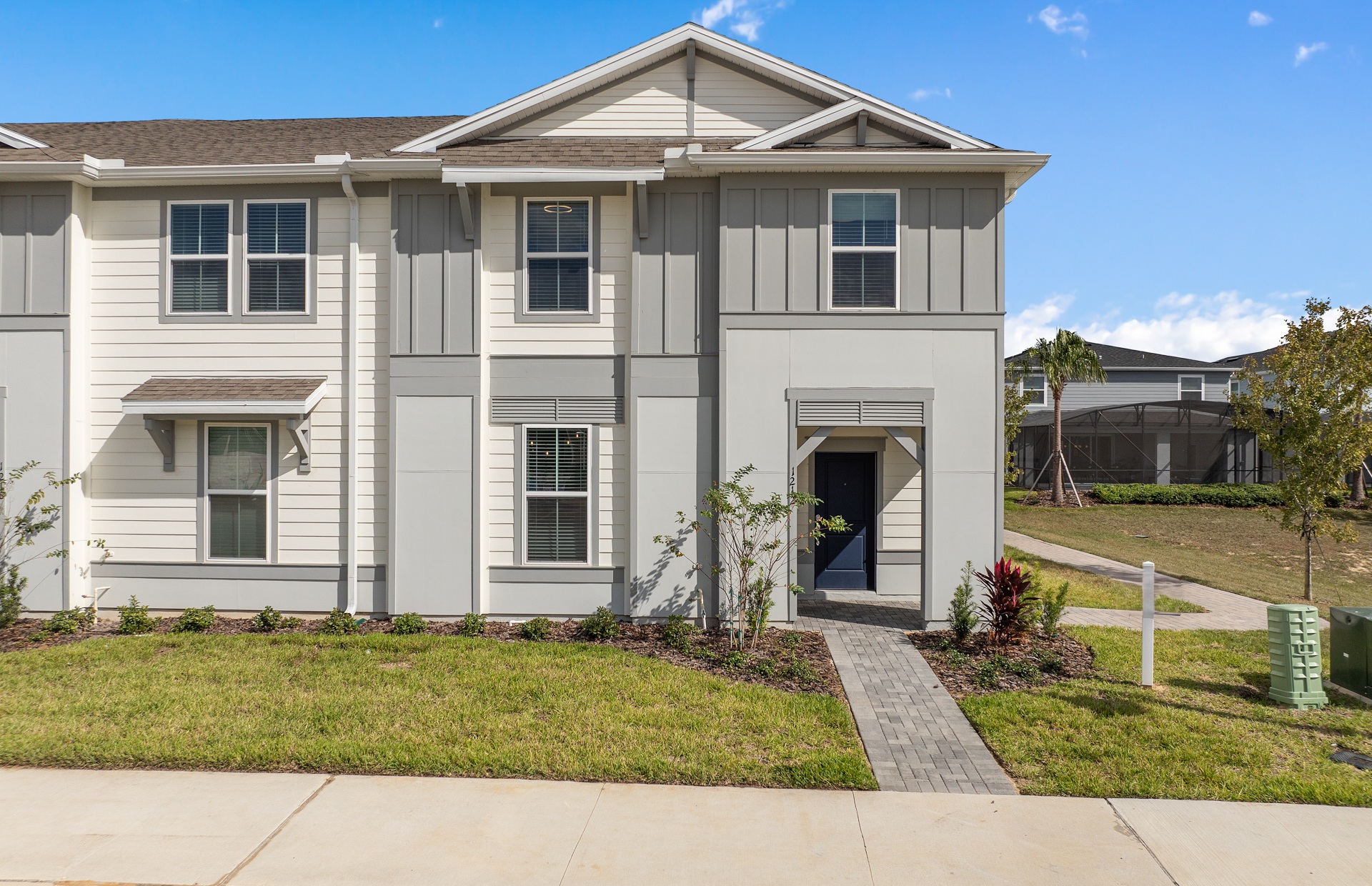
Inflation reduces the purchasing power of money over time. When the prices of housing, food, transportation, insurance, services, and other expenses rise faster than the return earned on savings, the same amount of capital buys less than it did before.
For international investors, the challenge can be greater because wealth may be exposed to two separate risks:
- Inflation in the investor’s home country;
- Depreciation of the investor’s home currency against the US dollar.
US real estate may provide one way to diversify these risks by combining a physical dollar-denominated asset with the possibility of rental income, long-term appreciation, mortgage principal reduction, and tax deductions when applicable.
However, real estate is not a guaranteed or automatic inflation hedge. Property values can decline, rent may not increase, expenses can rise faster than income, and exchange rates can move against the investor.
This guide explains how international investors may use US real estate as part of a long-term wealth-protection strategy, how inflation affects property performance, and which risks must be considered before investing.
Quick answer: US real estate may help protect wealth from inflation when the property produces sustainable rental income, is purchased at a reasonable price, uses manageable financing, and is held for an appropriate period. Protection may come from rent adjustments, potential appreciation, fixed-rate debt, principal reduction, and exposure to a dollar-denominated physical asset. None of these outcomes is guaranteed.
What Is Inflation?
Inflation is a general increase in the prices consumers pay for goods and services.
The US Bureau of Labor Statistics measures consumer inflation using the Consumer Price Index, commonly called CPI.
The CPI tracks changes in the prices paid by urban consumers for categories including:
- Housing;
- Food;
- Energy;
- Transportation;
- Medical care;
- Clothing;
- Education;
- Recreation;
- Other goods and services.
In June 2026, the CPI for All Urban Consumers had increased 3.5% over the previous 12 months. Shelter costs increased 3.3% during the same period.
Review the current US Bureau of Labor Statistics Consumer Price Index report.
How Inflation Reduces Purchasing Power
Inflation does not necessarily reduce the number of dollars an investor owns. It reduces what those dollars can purchase.
Illustrative Example
Assume an investor keeps $200,000 in an account that earns no return while prices increase by 3.5% over one year.
The nominal account balance remains:
$200,000
However, the approximate inflation-adjusted purchasing power becomes:
$200,000 ÷ 1.035 = approximately $193,237
The investor still has $200,000, but that amount purchases approximately what $193,237 purchased before the price increase.
This example does not account for interest, taxes, fees, or changes in specific prices.
Nominal Return Versus Real Return
An investment’s nominal return is the percentage increase before adjusting for inflation.
The real return reflects the change in purchasing power after inflation.
A simplified approximation is:
Real Return ≈ Nominal Return − Inflation
Example
If an investment gains 6% during a year in which inflation is 3.5%, the simplified real return is approximately:
6% − 3.5% = 2.5%
A more precise calculation is:
Real Return = (1 + Nominal Return) ÷ (1 + Inflation) − 1
Using the same figures:
1.06 ÷ 1.035 − 1 = approximately 2.42%
Positive nominal performance does not necessarily mean the investor gained purchasing power. When inflation exceeds the investment return, the real return is negative.
Is US Real Estate an Inflation Hedge?
US real estate may function as a partial long-term inflation hedge, but the relationship is not automatic.
Potential protection may come from:
- Property values that may rise over long periods;
- Rental income that may adjust as market rents change;
- Fixed-rate mortgage debt with stable principal and interest payments;
- Mortgage principal reduction;
- Ownership of a physical asset with replacement costs influenced by labor and materials;
- Dollar-denominated income and value;
- Potential tax deductions and depreciation.
Each mechanism has limitations. Property prices can underperform inflation, tenants may resist rent increases, operating expenses may rise, and financing can reduce or eliminate cash flow.
Current Data Shows That Real Estate Does Not Always Beat Inflation
The Federal Housing Finance Agency reported that US house prices increased 1.7% between the first quarter of 2025 and the first quarter of 2026.
During the 12 months ending June 2026, the CPI increased 3.5%.
These periods are not perfectly identical, but the comparison illustrates an important point: national home-price growth can temporarily remain below consumer inflation.
The FHFA also reported that prices increased in 42 states but declined in eight states and the District of Columbia. Results varied significantly across metropolitan markets.
Review the current FHFA House Price Index report.
Investors should not purchase property based on the assumption that all US real estate automatically appreciates faster than inflation.
Mechanism 1: Potential Long-Term Property Appreciation
Real estate values can increase over time as a result of:
- Population and household growth;
- Employment expansion;
- Limited housing supply;
- Higher construction costs;
- Land scarcity;
- Neighborhood improvements;
- Infrastructure investment;
- Growing household income;
- Demand for ownership or rental housing.
Inflation can increase the cost of land, construction materials, labor, financing, permits, and replacement buildings. This may support the value of existing properties in supply-constrained markets.
However, property appreciation may be limited by:
- Excess housing supply;
- Population decline;
- Job losses;
- High mortgage rates;
- Insurance problems;
- Property deterioration;
- Weak neighborhood demand;
- Natural-disaster exposure;
- Regulatory changes;
- Overpaying at acquisition.
The national market does not determine the result of every individual property.
Mechanism 2: Rental Income May Adjust Over Time
Rental income may provide partial inflation protection when market rents increase over time.
Rent growth may be supported by:
- Population growth;
- Household formation;
- Employment demand;
- Limited available rental inventory;
- Higher homeownership costs;
- Increased wages;
- Demand for a specific property type or location.
A landlord may be able to adjust rent when a lease renews or a new tenant occupies the property, subject to:
- Market conditions;
- The existing lease;
- Local and state law;
- Property condition;
- Competing rental inventory;
- The tenant’s ability and willingness to pay.
Rent cannot always be increased immediately. A fixed lease may maintain the same rent for its complete term, and some markets may not support an increase at renewal.
Illustrative Rental-Income Example
Assume a property initially rents for $2,500 per month.
Annual gross rental income is:
$2,500 × 12 = $30,000
If supported market rent increases by 3% at renewal, the new monthly rent would be:
$2,500 × 1.03 = $2,575
The new annual gross rent would be:
$2,575 × 12 = $30,900
Gross annual income increased by $900, but the investor must still determine whether expenses increased by more or less than this amount.
Rent Growth Does Not Guarantee Cash-Flow Growth
Property expenses may increase at the same time as rent.
Inflation can increase:
- Insurance premiums;
- Property-management fees;
- Maintenance labor;
- Construction materials;
- Utilities;
- Cleaning expenses;
- Landscaping;
- Association fees;
- Property taxes;
- Furniture and appliance replacement.
Illustrative Example
Assume annual rental income rises from $30,000 to $30,900, an increase of $900.
During the same year:
- Insurance increases by $500;
- Property taxes increase by $300;
- Maintenance costs increase by $250.
Total additional expenses are:
$500 + $300 + $250 = $1,050
Although rent increased, the property’s income before financing decreased by $150.
This is why an inflation-protection strategy must evaluate net operating income rather than rent alone.
Mechanism 3: Fixed-Rate Financing May Become Less Expensive in Real Terms
Financing can create an additional inflation-related feature when the mortgage has a fixed interest rate.
The Consumer Financial Protection Bureau explains that with a fixed-rate mortgage, the interest rate and monthly principal-and-interest payment remain the same.
Review the official CFPB guide to fixed- and adjustable-rate mortgages.
If rents and general prices rise over time while the principal-and-interest payment remains fixed, the debt payment may represent a smaller portion of the property’s income.
Illustrative Fixed-Debt Example
Assume a property has a fixed principal-and-interest payment of $1,600 per month.
Initial monthly rent:
$2,500
Mortgage principal and interest as a percentage of rent:
$1,600 ÷ $2,500 = 64%
Several years later, assume supported rent reaches $3,000 while the principal-and-interest payment remains $1,600.
The payment then represents:
$1,600 ÷ $3,000 = approximately 53.3%
This does not mean the investor’s complete monthly payment remains unchanged.
Property taxes, homeowners insurance, mortgage insurance, association fees, and escrow payments can increase. The CFPB notes that a borrower’s total monthly payment can change even when principal and interest remain fixed.
Adjustable-Rate Financing Can Create Additional Risk
An adjustable-rate mortgage may begin with a fixed introductory period and later change according to the loan terms.
When rates increase, the required payment may also increase.
An investor using adjustable-rate or balloon financing should review:
- The initial fixed period;
- The adjustment index;
- The lender’s margin;
- Periodic and lifetime rate limits;
- Maximum possible monthly payment;
- Balloon-payment date;
- Refinancing assumptions;
- Prepayment penalties.
A property should not depend on future refinancing being available at favorable terms.
Mechanism 4: Mortgage Principal Reduction
Part of a traditional amortizing mortgage payment may reduce the outstanding loan principal.
When rent supports property expenses and debt payments, tenants may indirectly contribute to reducing the investor’s mortgage balance.
Investor equity may increase through:
- Property appreciation;
- Mortgage principal reduction;
- Capital improvements;
- Additional owner contributions.
Principal reduction is not the same as spendable cash flow. The value remains in the property until the investor sells, refinances, or otherwise accesses the equity.
Mechanism 5: Ownership of a Physical Asset
Real estate is a tangible asset consisting of land and improvements.
Unlike cash, the asset does not represent only a fixed nominal amount.
A property can potentially provide:
- Rental income;
- Personal or commercial use;
- Collateral for financing;
- Potential appreciation;
- Value based partly on land and replacement cost.
Physical ownership also creates continuing expenses and responsibilities, including:
- Maintenance;
- Insurance;
- Property taxes;
- Management;
- Repairs;
- Legal compliance;
- Natural-disaster risk.
A physical asset can deteriorate when it is not maintained properly.
Mechanism 6: Dollar-Denominated Value and Income
A US property is purchased, valued, financed, rented, and sold primarily in US dollars.
For an international investor, this may provide diversification from assets held entirely in the home country and home currency.
The International Monetary Fund reported that the US dollar represented 57.13% of identified official foreign exchange reserves in the first quarter of 2026.
Review the official IMF Currency Composition of Official Foreign Exchange Reserves report.
Dollar exposure may benefit an investor when the home currency weakens against the dollar. The opposite can occur when the home currency strengthens.
Illustrative Currency Example
Assume an investor receives $20,000 in annual net rental income.
At an exchange rate of four home-currency units per US dollar, the income equals:
$20,000 × 4 = 80,000 home-currency units
If the home currency later weakens to five units per dollar, the same dollar income equals:
$20,000 × 5 = 100,000 home-currency units
The property did not generate more dollars, but the local-currency equivalent increased.
If the home currency strengthens to three units per dollar, the same $20,000 equals only 60,000 home-currency units.
Currency diversification can increase or reduce returns measured in the investor’s home currency.
Currency Diversification Is Not the Same as Guaranteed Protection
International investors should consider:
- Exchange-rate volatility;
- International transfer fees;
- Banking and source-of-funds documentation;
- Home-country capital-control rules;
- Foreign asset declarations;
- Tax reporting in both countries;
- The timing of converting money into or out of dollars.
Converting all available capital into one currency or property can create concentration risk.
Mechanism 7: Potential Tax Deductions and Depreciation
Eligible rental-property owners may be able to deduct qualifying expenses and claim depreciation under applicable US federal tax rules.
Potential expenses may include:
- Mortgage interest;
- Property-management fees;
- Insurance;
- Property taxes;
- Repairs;
- Utilities paid by the owner;
- Advertising;
- Professional services;
- Depreciation.
IRS Publication 527 explains rental income, expenses, personal use, and depreciation for residential rental property.
Residential rental buildings are generally depreciated using the straight-line method and mid-month convention over a 27.5-year recovery period under the general depreciation system. Land is not depreciated.
Review the current IRS Publication 527, Residential Rental Property.
Depreciation may reduce current taxable income, but it may also affect the tax calculation when the property is sold.
Foreign investors may have additional federal withholding, reporting, entity, FIRPTA, and home-country tax obligations.
How Inflation Affects Different Rental Strategies
Long-Term Rentals
A long-term rental may provide relatively predictable monthly income through leases lasting six months, one year, or longer.
Potential inflation-protection advantages include:
- Rent may be reviewed at lease renewal;
- Tenant turnover is generally less frequent than in vacation rentals;
- Operating expenses may be easier to forecast;
- Management may be less intensive;
- Fixed-rate debt may remain stable while rent changes.
Potential limitations include:
- Rent may remain fixed during the lease term;
- Tenant income may not support large increases;
- Local law may affect notices and rent adjustments;
- Vacancy can eliminate income temporarily;
- Insurance and taxes may rise faster than rent.
Short-Term Rentals
A short-term rental may allow nightly rates to be adjusted more frequently than long-term rent.
This can provide flexibility during periods of strong travel demand or rising prices.
However, short-term rental expenses can also respond quickly to inflation, including:
- Cleaning;
- Laundry;
- Utilities;
- Guest supplies;
- Platform fees;
- Property management;
- Furniture;
- Repairs;
- Insurance.
Nightly pricing flexibility does not guarantee occupancy or profit.
Medium-Term Rentals
Medium-term furnished rentals may serve traveling professionals, relocating families, students, insurance-displacement occupants, and temporary residents.
The owner may adjust rental terms more frequently than with an annual lease, but the property typically includes furniture, utilities, internet, and additional management responsibilities.
Choosing a Market for Inflation Resilience
A market selected for long-term wealth protection should have economic fundamentals that can support housing demand.
Investors may evaluate:
- Population and household growth;
- Employment diversification;
- Household income;
- Rental vacancy;
- Housing construction;
- Land and development constraints;
- Property taxes;
- Insurance availability;
- Infrastructure;
- Transportation;
- Resale demand.
A market with rapidly increasing prices is not automatically inflation-resistant. High prices may reduce rental yield and increase the risk of overpaying.
Property-Level Characteristics
Within the same city, two properties can produce very different results.
An inflation-resilient property should be evaluated for:
- Purchase price compared with supported rent;
- Property condition;
- Roof, plumbing, electrical, and air-conditioning systems;
- Insurance eligibility;
- Flood, storm, wildfire, or other environmental exposure;
- Association fees;
- Special assessments;
- Rental restrictions;
- Tenant or guest demand;
- Expected resale market;
- Maintenance requirements.
A property purchased at an excessive price may fail to protect purchasing power even in a strong market.
Calculate the Complete Net Return
The investor should evaluate total performance rather than property appreciation alone.
Potential components include:
- Rental income;
- Vacancy;
- Operating expenses;
- Net operating income;
- Mortgage payments;
- Principal reduction;
- Capital improvements;
- Property appreciation or depreciation;
- Taxes;
- Currency movement;
- Purchase and sale expenses.
Illustrative Annual Property Analysis
| Category | Illustrative Amount |
|---|---|
| Gross rental income | $36,000 |
| Vacancy allowance | -$1,800 |
| Property management | -$3,600 |
| Property taxes | -$5,000 |
| Insurance | -$4,000 |
| Association fees | -$2,400 |
| Maintenance and reserves | -$3,500 |
| Net operating income | $15,700 |
| Annual mortgage principal and interest | -$13,200 |
| Illustrative pre-tax cash flow | $2,500 |
The property may also reduce mortgage principal and change in value, but these are not included in spendable annual cash flow.
The example is educational and does not represent projected performance for a specific investment.
Inflation Stress Test
Before purchasing, the investor should test how the property may perform under several scenarios.
Base Scenario
- Rent follows the supported market estimate;
- Normal vacancy;
- Expected insurance and taxes;
- Routine maintenance;
- Current financing terms.
Higher-Inflation Scenario
- Rent increases moderately;
- Insurance increases significantly;
- Property taxes increase;
- Maintenance and utilities become more expensive;
- Furniture and capital replacements cost more.
Downside Scenario
- Rent is 10% below projection;
- The property remains vacant for two or three months;
- Insurance is 20% higher;
- A major repair is required;
- The property value remains flat;
- The home currency strengthens against the dollar.
An investment designed for wealth protection should remain financially manageable under reasonable downside assumptions.
Maintain Financial Reserves
Real estate should not be operated without reserves.
Funds may be needed for:
- Vacancy;
- Insurance deductibles;
- Major repairs;
- Roof replacement;
- Heating or air-conditioning replacement;
- Plumbing problems;
- Appliance replacement;
- Association assessments;
- Legal and accounting expenses;
- Property-tax increases;
- Storm preparation and recovery.
Without reserves, an owner may be forced to sell during an unfavorable market or transfer capital when the exchange rate is unfavorable.
Real Estate Versus Cash
| Factor | Cash | Direct Real Estate |
|---|---|---|
| Liquidity | Generally high | Generally low |
| Physical backing | No physical property ownership | Land and improvements |
| Income | Interest when deposited or invested | Potential rental income |
| Inflation exposure | Purchasing power may decline | Income and value may adjust, but not automatically |
| Management | Low | Moderate to high |
| Transaction cost | Generally low | Buying and selling costs can be substantial |
Cash is important for liquidity, emergencies, property expenses, and near-term needs. Real estate should not replace all liquid reserves.
Real Estate Versus Treasury Inflation-Protected Securities
Treasury Inflation-Protected Securities, commonly called TIPS, are US Treasury securities whose principal adjusts according to inflation measured by CPI.
TIPS are specifically designed to provide inflation protection.
Real estate is not contractually indexed to inflation.
| Factor | US Real Estate | TIPS |
|---|---|---|
| Inflation adjustment | Indirect and market-dependent | Principal linked to CPI |
| Income | Potential rental income | Interest based on adjusted principal |
| Management | Requires property operations | No property management |
| Liquidity | Property sale may take time | Marketable security that may be sold |
| Leverage | Property financing may be available | Generally purchased as a security |
| Property-specific risk | Yes | No individual property risk |
Review the official TreasuryDirect guide to TIPS.
Real estate and inflation-protected securities can serve different purposes within a diversified strategy.
Real Estate Versus REITs
A publicly traded real estate investment trust may provide exposure to income-producing real estate without requiring the investor to purchase and operate an individual property.
Potential publicly traded REIT advantages include:
- Greater liquidity;
- Professional management;
- Potential exposure to multiple properties;
- Lower capital required for initial participation.
Potential limitations include:
- Daily share-price volatility;
- Limited investor control;
- Management and corporate risks;
- Exposure to specific real estate sectors;
- Distributions that can change.
A REIT share is not the same as direct ownership of an identifiable property.
Diversification Remains Important
US real estate should generally be evaluated as one component of a broader financial strategy rather than the investor’s only asset.
Investor.gov defines diversification as spreading money among different investments to reduce concentration risk. It also states that diversification cannot guarantee protection from market losses.
Review the official Investor.gov diversification guide.
Potential diversification categories may include:
- Cash reserves;
- Fixed-income investments;
- Inflation-protected securities;
- Public equities;
- REITs;
- Direct real estate;
- Assets in more than one country or currency.
The correct allocation depends on liquidity needs, goals, financial position, tax circumstances, risk tolerance, and investment horizon.
Tax Considerations for Foreign Property Owners
Foreign investors may have US federal tax obligations involving:
- Rental income;
- Depreciation;
- Effectively connected income elections;
- Tax identification numbers;
- Annual income-tax returns;
- Entity reporting;
- Partnership withholding;
- FIRPTA when the property is sold;
- Estate and gift tax;
- Home-country reporting.
The IRS explains that rental income from US real estate owned by a nonresident alien may generally be subject to a 30% tax on gross income, or a lower treaty rate, when it is not effectively connected with a US trade or business.
A qualifying investor may elect to treat the income as effectively connected and deduct eligible expenses before tax is calculated.
Review the official IRS guidance for nonresident owners of US real property.
Inflation protection should be measured using the investor’s after-tax result, not only gross property performance.
Exit Planning and Inflation
Direct real estate involves transaction costs at purchase and sale.
Potential sale-related costs include:
- Brokerage and marketing;
- Title and closing expenses;
- Property preparation;
- Repairs;
- Legal and accounting fees;
- Federal tax;
- Depreciation-related tax consequences;
- FIRPTA withholding procedures;
- Currency conversion and transfer fees.
A short holding period may not provide sufficient time for rental income or appreciation to overcome acquisition and sale costs.
The investor should define:
- Expected holding period;
- Target future buyer;
- Likely sale expenses;
- Tax consequences;
- Conditions that would justify selling;
- Whether refinancing could be considered instead.
Step-by-Step Wealth-Protection Framework
- Measure current exposure: identify how much wealth is concentrated in one currency, country, bank, business, or asset class.
- Define the objective: determine whether the priority is income, capital preservation, diversification, appreciation, or a combination.
- Preserve liquidity: maintain appropriate cash and emergency reserves before purchasing an illiquid property.
- Establish a complete budget: include acquisition, closing, financing, repairs, furnishing, and reserves.
- Compare US markets: analyze population, employment, rent, supply, insurance, and property taxes.
- Evaluate the property: complete inspection, title, association, insurance, and rental due diligence.
- Calculate net performance: use realistic income and every expected expense.
- Stress-test inflation: model higher insurance, taxes, maintenance, and utilities.
- Review financing: understand fixed, adjustable, balloon, and prepayment provisions.
- Confirm management: establish reliable local operation and reporting.
- Review cross-border taxes: coordinate US and home-country professionals.
- Define the exit: establish holding period, sale process, and estimated costs.
- Monitor annually: compare property results with inflation, currency movement, and alternative investments.
Annual Inflation-Protection Review
The owner should evaluate:
- Annual rent growth;
- Annual operating-expense growth;
- Net operating income;
- Pre-tax cash flow;
- Mortgage principal reduction;
- Current property value;
- Inflation during the period;
- Home-currency exchange-rate changes;
- Property tax and insurance trends;
- Capital improvements;
- Estimated sale expenses;
- After-tax return.
A property that increased in nominal value may still have produced a weak real return after inflation, expenses, and taxes.
Common Inflation-Protection Mistakes
- Assuming property values always rise faster than inflation;
- Purchasing based only on historical appreciation;
- Ignoring rental-income expenses;
- Assuming rent can increase whenever expenses rise;
- Using an adjustable loan without modeling higher payments;
- Ignoring insurance and property-tax inflation;
- Investing all liquid capital in one property;
- Failing to maintain emergency reserves;
- Measuring performance only in the home currency;
- Assuming the dollar will always strengthen;
- Ignoring currency-conversion and transfer fees;
- Choosing a market based only on popularity;
- Overpaying because of fear of inflation;
- Ignoring property condition and capital replacements;
- Failing to calculate after-tax returns;
- Investing without a clear holding period or exit plan.
Frequently Asked Questions
Does real estate always protect against inflation?
No. Real estate may provide long-term inflation protection through rent, potential appreciation, fixed-rate financing, and physical asset ownership, but prices and income can underperform inflation during certain periods.
How can rental property protect purchasing power?
Market rent may increase over time, allowing property income to adjust as general prices rise. The result depends on tenant demand, lease terms, competition, property condition, and local law.
Can property expenses rise faster than rent?
Yes. Insurance, taxes, maintenance, management, utilities, association fees, and repairs may increase faster than rental income, reducing net cash flow.
Why can a fixed-rate mortgage help during inflation?
The interest rate and principal-and-interest payment remain fixed while rent and general prices may rise. However, insurance, property taxes, escrow, and association expenses can still increase.
Is a US property protected from currency devaluation?
The property remains denominated in US dollars, which may diversify home-currency exposure. The home-currency value can rise or fall depending on exchange-rate movements.
Does purchasing US real estate guarantee dollar protection?
No. The property can lose value in dollars, produce negative cash flow, or require unexpected capital. Currency diversification does not eliminate property or investment risk.
Is cash safer than real estate during inflation?
Cash provides liquidity and nominal stability but may lose purchasing power when its return is below inflation. Real estate may provide income and appreciation but is less liquid and carries operating risk.
Are TIPS a more direct inflation hedge?
TIPS are specifically structured to adjust principal according to CPI. Real estate has no contractual inflation adjustment and depends on property and market performance.
Should all wealth be invested in US real estate?
Concentrating all wealth in one property, market, currency, or asset class can increase risk. Allocation should reflect the investor’s liquidity needs, objectives, financial position, and professional advice.
Which rental strategy offers the best inflation protection?
No strategy is universally best. Long-term rentals may provide income stability, while short-term rentals permit more frequent pricing changes but involve higher expenses and income variability.
Can foreign investors deduct rental-property expenses?
Potentially. The tax treatment depends on the investor’s tax status, ownership structure, elections, documentation, and applicable federal rules.
How long should a property be held?
The appropriate holding period depends on the investment objective, market, financing, transaction costs, tax consequences, and liquidity needs. Real estate is generally better evaluated as a multiyear investment.
How should I measure whether the property beat inflation?
Calculate the complete return from cash flow, principal reduction, and value change, subtract taxes and transaction costs, and compare the resulting return with inflation during the same period.
Use US Real Estate as Part of a Broader Protection Strategy
US real estate may help international investors reduce concentration in one currency or economy while creating the possibility of rental income and long-term property appreciation.
Its potential inflation-protection features include rent adjustments, fixed-rate debt, mortgage principal reduction, physical asset ownership, and dollar denomination.
These benefits are not automatic. A poorly selected or excessively financed property can lose purchasing power after inflation, expenses, taxes, and currency changes are considered.
A responsible strategy begins with complete financial analysis, appropriate reserves, market and property due diligence, professional management, cross-border tax planning, and a realistic holding period.
Buldora helps international investors evaluate US real estate opportunities based on income, expenses, financing, currency exposure, risk, and long-term investment objectives.
Build your US real estate investment strategy with Buldora
About the Author
Raphaela Banks is Co-Founder and Global Real Estate Strategist at Buldora Invest. She develops strategies and educational content to help international investors understand real estate opportunities in the United States, Brazil, and Dubai.
Sources & References
This article was researched using original government publications, official financial education resources, tax guidance, and primary economic data. Inflation, property values, exchange rates, interest rates, taxes, insurance, and investment conditions may change after publication.
- US Bureau of Labor Statistics — Consumer Price Index, June 2026
- US Bureau of Labor Statistics — Consumer Price Index
- Federal Housing Finance Agency — US House Price Index Report, First Quarter 2026
- Federal Housing Finance Agency — FHFA House Price Index Data
- International Monetary Fund — Currency Composition of Official Foreign Exchange Reserves, First Quarter 2026
- Board of Governors of the Federal Reserve System — Monetary Policy Report, July 2026
- Consumer Financial Protection Bureau — Understanding Fixed- and Adjustable-Rate Mortgages
- Consumer Financial Protection Bureau — Principal, Interest, and Total Mortgage Payments
- Internal Revenue Service — Publication 527, Residential Rental Property
- Internal Revenue Service — Topic 414, Rental Income and Expenses
- Internal Revenue Service — Nonresident Aliens: Real Property Located in the United States
- Internal Revenue Service — FIRPTA Withholding
- US Department of the Treasury — Treasury Inflation-Protected Securities
- US Securities and Exchange Commission, Investor.gov — Diversify Your Investments
- US Securities and Exchange Commission, Investor.gov — Real Estate Investment Trusts
This article is provided for general informational and educational purposes only. It does not constitute legal, tax, accounting, securities, lending, currency, financial, property-management, or investment advice. Real estate does not guarantee protection from inflation, currency depreciation, declining property values, vacancy, or loss. Property prices, rent, interest rates, taxes, insurance, regulations, and exchange rates may change. International investors should consult qualified US and home-country professionals before making an investment decision.