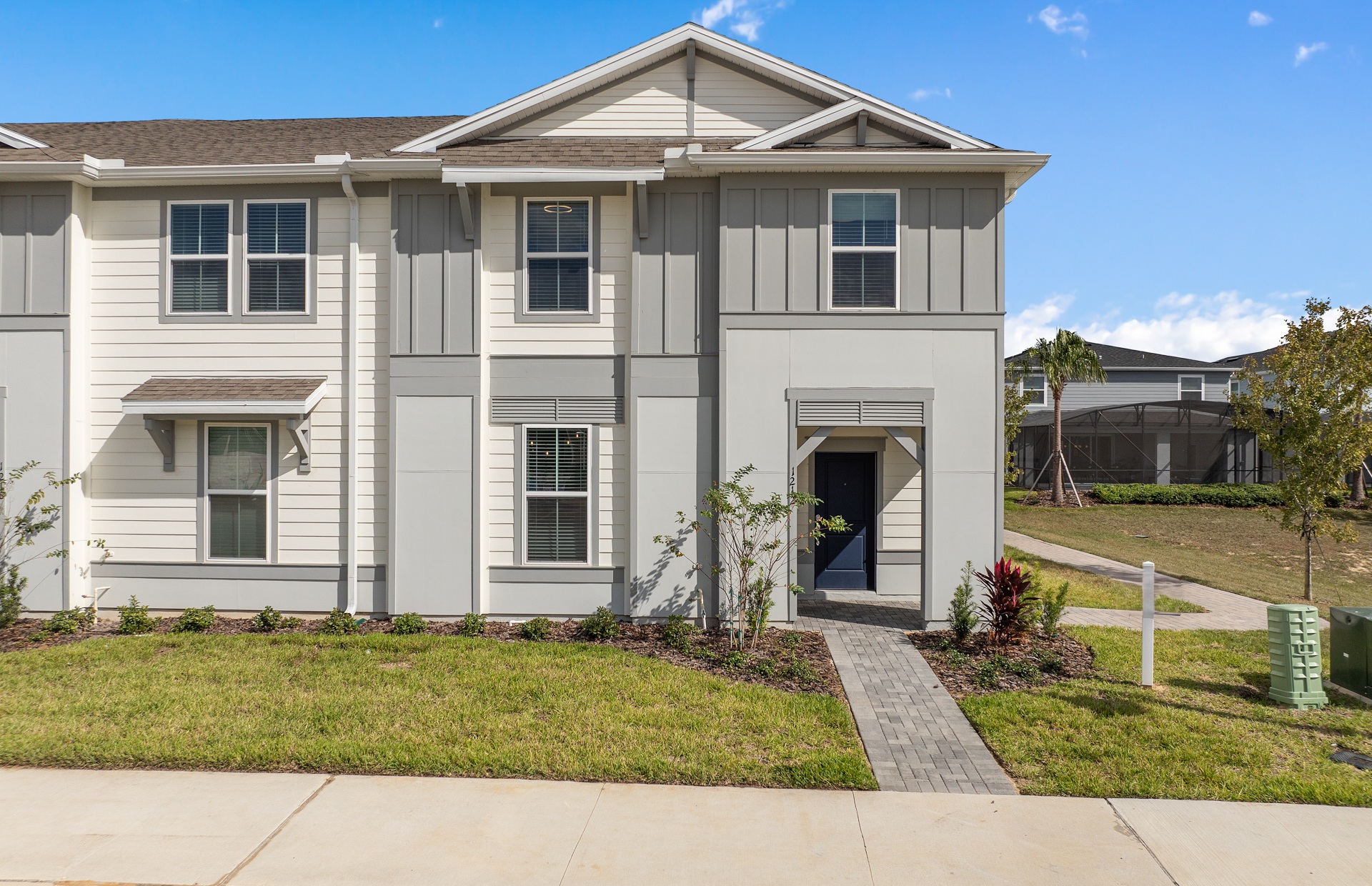
Investing in United States real estate from Latin America can provide access to a physical dollar-denominated asset, rental income, geographic diversification, personal use and potential long-term appreciation.
The process is available to many qualified international buyers, but it requires more than selecting an attractive property and transferring money to the United States.
A Latin American investor must coordinate:
- Legal eligibility;
- Source-of-funds documentation;
- Currency conversion;
- Cash or mortgage financing;
- Ownership structure;
- Property and market selection;
- Inspection and title review;
- Insurance;
- Rental management;
- U.S. taxation;
- Tax and reporting obligations in the investor’s country of residence;
- A future sale and succession plan.
This guide explains how to invest in U.S. real estate from Latin America, including the complete purchase process, financing alternatives, legal structures, taxation, market selection, remote closing and ongoing management.
Direct answer: A qualified Latin American buyer can generally purchase U.S. residential property without being a U.S. citizen or permanent resident. The property may be purchased in cash or through an eligible foreign national mortgage. The investor should first define the objective, establish the complete budget, verify legal eligibility, select an ownership structure, document the source of funds and complete independent property due diligence.
Purchasing U.S. property does not guarantee rental income, appreciation, financing approval, currency gains, tax savings, immigration status or investment profit.
Can Latin American Citizens Buy Real Estate in the United States?
United States federal law does not impose a general residency or citizenship requirement on ordinary residential real estate purchases.
Investors from Mexico, Colombia, Brazil, Argentina, Chile, Peru and other Latin American countries commonly participate in the U.S. residential market.
However, eligibility should never be described as completely unrestricted.
A transaction may be affected by:
- Federal economic sanctions;
- State-specific foreign ownership laws;
- Restrictions involving agricultural land;
- Rules involving sensitive government or military locations;
- CFIUS national-security review;
- Banking and anti-money-laundering procedures;
- Source-of-funds requirements;
- Property-specific restrictions.
The U.S. Department of the Treasury explains that the Committee on Foreign Investment in the United States may review certain purchases, leases and concessions involving real estate located near specified sensitive sites.
Review the official CFIUS real estate guidance.
The buyer’s legal eligibility should be confirmed for the specific state, property and ownership structure before a nonrefundable deposit is made.
What Foreign Buyer Data Shows
The National Association of Realtors’ latest international report covered residential transactions completed between April 2024 and March 2025.
The report identified:
- 78,100 existing homes purchased by international buyers;
- $56 billion in total international purchase volume;
- A median international purchase price of $494,400;
- 47% of foreign buyers paying entirely in cash;
- 47% purchasing for vacation use, residential rental or both;
- 63% purchasing detached single-family homes;
- Latin American and Caribbean buyers representing 28% of international purchases.
Among the principal Latin American countries:
- Mexico represented 8% of foreign buyer purchases;
- Brazil represented 3%;
- Colombia represented 3%.
The leading state destinations included:
- Florida: 21% of foreign purchases;
- California: 15%;
- Texas: 10%;
- New York: 7%;
- Arizona: 5%.
Latin American and Caribbean buyers represented approximately:
- 31% of Florida’s foreign buyers;
- 44% of Texas foreign buyers;
- 26% of New York foreign buyers;
- 26% of Arizona foreign buyers.
Review the official 2025 International Transactions in U.S. Residential Real Estate Report.
The data demonstrates active Latin American participation. It does not establish that every buyer earned a profit or that one state is appropriate for every investor.
Does Buying a U.S. Property Provide a Visa?
Purchasing ordinary residential property does not automatically provide:
- A tourist visa;
- A work permit;
- Permanent residency;
- A Green Card;
- U.S. citizenship;
- Permission to remain in the United States.
Real estate ownership and immigration status are separate legal matters.
Immigration programs involving investment have their own requirements and should not be confused with purchasing a home, condominium or rental property.
Step 1: Define the Investment Objective
The investor should define what the property is expected to accomplish before selecting a state or city.
Long-Term Rental Income
An income-focused investor may prioritize:
- Stable tenant demand;
- Rent relative to purchase price;
- Manageable taxes and insurance;
- Limited association expenses;
- Professional property management;
- Acceptable net cash flow.
Short-Term Vacation Rental
A vacation-rental investor may prioritize:
- Tourism demand;
- Legal short-term rental permission;
- Average nightly rate;
- Occupancy;
- Community amenities;
- Professional guest management.
Short-term rental income is generally more variable and operationally intensive than long-term rental income.
Medium-Term Furnished Rental
This strategy may serve:
- Traveling professionals;
- Corporate employees;
- Relocating families;
- Students;
- Seasonal residents;
- Temporary healthcare workers.
Personal or Family Use
A second-home buyer may prioritize:
- Travel accessibility;
- Location near family or attractions;
- Community amenities;
- Maintenance while the home is vacant;
- Association rules;
- Resale demand.
Long-Term Appreciation
An appreciation-focused investor may evaluate:
- Population and household growth;
- Employment expansion;
- Housing supply;
- Land availability;
- Infrastructure;
- Future resale demand.
Appreciation is never guaranteed and should not be the only reason the property appears financially acceptable.
Step 2: Establish the Complete Investment Budget
The required capital is greater than the down payment or advertised property price.
The complete budget may include:
- Cash purchase price or mortgage down payment;
- Earnest money deposit;
- Loan origination fees;
- Appraisal;
- Home inspection;
- Specialist inspections;
- Survey;
- Title search;
- Owner’s title insurance;
- Attorney and accounting fees;
- Entity formation when appropriate;
- Insurance premium;
- Prepaid property taxes and insurance;
- Association applications and transfer fees;
- Initial repairs;
- Furniture and equipment;
- Currency conversion;
- International transfer expenses;
- Operating reserves.
Illustrative Financed Purchase
Assume an investor evaluates a $400,000 rental property and receives a mortgage proposal requiring a 30% down payment.
| Category | Illustrative Amount |
|---|---|
| Purchase price | $400,000 |
| 30% down payment | $120,000 |
| Illustrative lender and closing costs | $16,000 |
| Inspection, appraisal, legal and entity costs | $6,000 |
| Initial repairs or preparation | $12,000 |
| Initial operating reserve | $24,000 |
| Illustrative initial capital required | $178,000 |
This example is educational. It does not represent a standard lender requirement or guaranteed transaction estimate.
Actual capital requirements vary according to the lender, property, location, insurance, ownership structure, currency conversion and intended use.
Maintain Liquidity After Closing
The buyer should not invest every available dollar in the acquisition.
Post-closing reserves may be required for:
- Mortgage payments during vacancy;
- Insurance deductibles;
- Roof replacement;
- Heating and air-conditioning replacement;
- Plumbing and electrical repairs;
- Appliance replacement;
- Association assessments;
- Property-tax increases;
- Legal and accounting expenses;
- Currency movements;
- Unexpected travel.
Step 3: Decide Between Cash and Financing
Cash Purchase
Potential advantages include:
- No mortgage qualification;
- No monthly mortgage payment;
- No mortgage interest;
- Fewer lender-required documents;
- Potentially faster closing;
- Potentially stronger negotiating terms.
Potential limitations include:
- Greater capital concentration;
- Reduced liquidity;
- Less money available for repairs or other investments;
- Need to convert a larger amount into dollars;
- Opportunity cost.
Foreign National Mortgage
Some lenders offer mortgage programs for international buyers who do not have traditional U.S. income or credit history.
These may be described as:
- Foreign national mortgages;
- DSCR loans;
- Portfolio loans;
- Business-purpose investment-property loans;
- Asset-based loans;
- Bank-statement programs.
There is no universal foreign national mortgage.
Requirements may depend on:
- Country of citizenship and residence;
- Property type;
- Property use;
- Loan amount;
- Down payment;
- Financial reserves;
- International or U.S. credit history;
- Rental-income analysis;
- Ownership structure;
- Source-of-funds documentation;
- Lender policy.
Compare the Complete Mortgage
Review:
- Interest rate;
- Fixed or adjustable structure;
- Loan term;
- Origination points;
- Underwriting and processing fees;
- Monthly payment;
- Property-tax and insurance escrow;
- Required reserves;
- Prepayment penalty;
- Balloon payment;
- Refinancing requirements;
- Personal guarantees;
- Total cash required at closing.
The lowest advertised interest rate is not necessarily the least expensive loan.
For mortgages covered by U.S. consumer rules, the Consumer Financial Protection Bureau recommends comparing multiple Loan Estimates and reviewing the Closing Disclosure before closing.
Review the official resources:
Some business-purpose investment loans may follow different disclosure requirements.
What Is an ITIN?
An Individual Taxpayer Identification Number is issued by the Internal Revenue Service to qualifying individuals who need a U.S. federal taxpayer identification number but are not eligible for a Social Security number.
An ITIN may be relevant for:
- Federal tax returns;
- Reporting rental income;
- Certain mortgage programs;
- Claiming eligible tax refunds;
- FIRPTA procedures.
An ITIN does not:
- Provide immigration status;
- Authorize employment;
- Provide Social Security benefits;
- Guarantee mortgage approval;
- Create residency rights.
An ITIN is not necessarily required before every cash purchase.
Review the official IRS ITIN guidance.
What Is an EIN?
An Employer Identification Number is a federal taxpayer identification number used by businesses and certain legal entities.
An EIN may be relevant when the buyer uses:
- An LLC;
- A partnership;
- A corporation;
- Another entity requiring federal identification.
An EIN does not replace the need for investor-specific tax or immigration analysis.
Step 4: Select the Ownership Structure
Potential ownership structures include:
- Individual ownership;
- Single-member LLC;
- Multimember LLC;
- Partnership;
- Corporation;
- Trust;
- Another estate-planning structure.
No structure is automatically appropriate for every Latin American investor.
The decision may affect:
- Liability;
- Mortgage eligibility;
- U.S. federal tax treatment;
- State fees and annual reports;
- Banking;
- Accounting;
- FIRPTA;
- Estate and succession planning;
- Reporting in the investor’s country of residence.
An LLC Is Not an Automatic Tax Solution
An LLC does not automatically:
- Reduce U.S. income tax;
- Eliminate personal liability;
- Avoid FIRPTA;
- Eliminate estate-tax exposure;
- Guarantee financing;
- Prevent probate in every situation;
- Remove federal or state filings;
- Eliminate home-country reporting.
A foreign-owned U.S. disregarded entity may also have federal information-reporting obligations involving Form 5472 and a pro forma Form 1120 when reportable transactions occur.
The ownership structure should be reviewed before the purchase contract is signed.
Step 5: Transfer the Investment Capital Legally
The investor should prepare the international transfer before contractual deadlines begin.
Banks, lenders, attorneys, title companies and closing professionals may request:
- Government identification;
- Proof of address;
- Tax-residency information;
- Bank statements;
- Source-of-funds documentation;
- Source-of-wealth information;
- Property-sale documents;
- Business income records;
- Inheritance or gift documentation;
- Investment-account statements.
Compare the Complete Currency Cost
Review:
- Quoted exchange rate;
- Currency spread;
- Transfer fee;
- Receiving-bank fee;
- Intermediary-bank charges;
- Applicable home-country taxes;
- Transfer limits;
- Processing time;
- Required documents.
The provider advertising the lowest transfer fee may use a less favorable exchange rate.
Use Regulated Financial Channels
International investment should use lawful and documented institutions.
The transaction should not be structured to:
- Conceal the source of funds;
- Avoid tax reporting;
- Misrepresent beneficial ownership;
- Evade banking controls;
- Use third-party accounts without a documented legal purpose.
Step 6: Select the U.S. Market
The correct market depends on the objective rather than which city is most familiar to the investor.
Market analysis should include:
- Purchase prices;
- Rental demand;
- Vacancy;
- Population and household growth;
- Employment sectors;
- Housing inventory;
- New construction;
- Property taxes;
- Insurance;
- Rental regulations;
- Management availability;
- Resale demand.
Florida
Florida remains the leading state destination for international residential buyers.
Potential advantages include:
- Geographic accessibility from Latin America;
- International airports;
- Spanish- and Portuguese-speaking professional networks;
- Tourism;
- Long-term residential demand;
- Multiple property and rental models;
- Established international buyer infrastructure.
Potential risks include:
- Insurance expenses;
- Hurricane and flood exposure;
- Association assessments;
- Short-term rental restrictions;
- Property-tax changes after purchase;
- Competition from new construction.
Orlando and Central Florida
Potential strategies include:
- Long-term residential rental;
- Medium-term furnished rental;
- Short-term rental in specifically authorized areas;
- New-construction ownership;
- Second-home use.
Orlando, Kissimmee, Davenport, Haines City, Clermont and other Central Florida communities have different taxes, rental rules and economic profiles.
Miami and South Florida
South Florida may appeal to buyers seeking:
- International recognition;
- Urban and waterfront properties;
- Premium residential ownership;
- Personal use;
- International resale demand.
Potential concerns include higher prices, condominium fees, special assessments, insurance, flood exposure and rental restrictions.
Tampa Bay
Tampa Bay may offer a combination of metropolitan employment, long-term rental demand, tourism and Gulf Coast lifestyle.
Flood, storm and insurance exposure should be evaluated at the property level.
Jacksonville
Jacksonville may be considered by investors focused on traditional long-term residential demand connected to logistics, healthcare, finance, government and military activity.
Neighborhood-level analysis is particularly important.
Texas
Texas received approximately 10% of international residential purchases in the latest NAR report.
Latin American and Caribbean buyers represented approximately 44% of Texas foreign buyers.
Markets such as Dallas–Fort Worth, Houston, San Antonio and Austin have different:
- Employment bases;
- Property prices;
- Rental yields;
- Property taxes;
- Insurance conditions;
- Housing supply;
- Resale demand.
Texas should not be treated as one uniform real estate market.
Other U.S. Markets
Investors may also evaluate markets in:
- Georgia;
- North Carolina;
- South Carolina;
- Arizona;
- Tennessee;
- Other states with suitable property fundamentals.
No city or state is automatically the best investment for every Latin American buyer.
Step 7: Select the Property Type
Single-Family Home
Potential advantages include:
- Broad appeal to families;
- Greater privacy;
- Potentially fewer association restrictions;
- Greater control over maintenance;
- Potentially broad resale demand.
The owner is generally responsible for the complete structure, roof, exterior and major systems.
Townhouse
A townhouse may offer:
- Lower purchase price than many detached homes;
- Private entrance;
- Community amenities;
- Reduced exterior maintenance in some communities;
- Residential appeal.
The association documents determine maintenance and insurance responsibilities.
Condominium
A condominium may offer:
- Lower entry cost;
- Less exterior maintenance;
- Community amenities;
- Access to central locations.
Potential risks include:
- High association fees;
- Special assessments;
- Limited reserve funding;
- Rental restrictions;
- Building insurance issues;
- Financing limitations;
- Structural or legal problems affecting the entire building.
Small Multifamily Property
A duplex, triplex or four-unit property may provide income from more than one unit.
Potential considerations include:
- Higher management requirements;
- Multiple tenant relationships;
- Property condition;
- Utility arrangements;
- Financing classification;
- Local zoning;
- Insurance.
New Construction
New construction may provide modern systems and builder warranties, but the investor should review:
- Final price after upgrades;
- Lot premiums;
- Association fees;
- Future property taxes;
- Builder contract terms;
- Completion deadlines;
- Competition from future phases;
- Independent inspection rights.
Step 8: Calculate the Property’s Real Financial Performance
Gross rental income is not investment profit.
Potential operating expenses include:
- Vacancy;
- Property management;
- Property taxes;
- Insurance;
- Association fees;
- Maintenance;
- Repairs;
- Utilities;
- Cleaning;
- Landscaping and pool service;
- Licensing and lodging taxes;
- Accounting and legal services;
- Capital reserves.
Illustrative Long-Term Rental Analysis
Assume a property produces $3,000 in scheduled monthly rent.
| Category | Illustrative Annual Amount |
|---|---|
| Scheduled gross rent | $36,000 |
| Vacancy allowance | -$1,800 |
| Property management | -$3,600 |
| Property taxes | -$5,500 |
| Insurance | -$3,800 |
| Association fees | -$1,800 |
| Maintenance and capital reserves | -$3,500 |
| Illustrative net operating income | $16,000 |
| Annual financing payments | -$14,400 |
| Illustrative pre-tax cash flow | $1,600 |
The example excludes investor-specific taxes, major improvements, currency movements and future sale costs.
It does not represent projected performance for a particular property.
Important Investment Metrics
Gross Rental Yield
Gross rental yield = annual gross rent ÷ purchase price × 100
This excludes property expenses and financing.
Net Operating Income
Net operating income = gross operating income − operating expenses
Capitalization Rate
Capitalization rate = net operating income ÷ property value × 100
Pre-Tax Cash Flow
Pre-tax cash flow = net operating income − financing payments
Cash-on-Cash Return
Cash-on-cash return = annual pre-tax cash flow ÷ total cash invested × 100
Debt Service Coverage Ratio
Debt service coverage ratio = net operating income ÷ annual debt service
Projected results should be calculated under base, conservative and downside scenarios.
Step 9: Build the Professional Team
A cross-border transaction may involve:
Buyer’s Real Estate Professional
May assist with property searches, comparable sales, offers, transaction deadlines and local market information.
Real Estate Attorney
May assist with ownership structure, contracts, title issues, rental agreements and succession planning.
International Tax Professional
Should understand federal taxation of foreign owners and coordinate with a professional in the investor’s country of tax residence.
Mortgage Professional
Should provide complete written information regarding eligibility, rates, fees, reserves and penalties.
Title or Closing Professional
May coordinate escrow, title review, document execution, fund distribution and deed recording, depending on the state.
Insurance Professional
Should confirm the cost and availability of coverage for the property’s intended use.
Home Inspector
Should provide an independent assessment of visible property conditions.
Property Manager
Should have experience with the property type, rental model, local market and international owners.
Step 10: Submit the Offer and Understand the Contract
A purchase offer may address:
- Purchase price;
- Earnest money deposit;
- Financing;
- Inspection period;
- Appraisal;
- Title requirements;
- Association approval;
- Closing date;
- Seller credits;
- Furniture and equipment;
- Cancellation rights.
The investor should understand:
- When the deposit becomes nonrefundable;
- When the inspection period ends;
- Which financing conditions apply;
- What happens when a deadline is missed;
- Which events allow cancellation;
- Which documents control the transaction.
Step 11: Complete Property Due Diligence
Independent Inspection
A general inspection may evaluate visible conditions involving:
- Roof;
- Foundation and structure;
- Electrical system;
- Plumbing;
- Heating and air conditioning;
- Water intrusion;
- Windows and doors;
- Appliances;
- Safety concerns.
Specialist inspections may be appropriate for:
- Roof;
- Foundation;
- Pool;
- Sewer line;
- Septic system;
- Mold;
- Pests;
- Environmental conditions.
Review the official CFPB home inspection guidance.
Title Search
A title search may identify:
- Legal ownership;
- Mortgages;
- Liens;
- Judgments;
- Easements;
- Recorded restrictions;
- Other ownership claims.
Owner’s Title Insurance
Owner’s title insurance may protect the buyer against certain covered ownership problems that existed before the purchase.
A lender’s title policy generally protects the lender rather than the buyer’s equity.
Review the official CFPB title and closing services guidance.
Association Review
For a condominium, townhouse or HOA community, review:
- Budget;
- Financial statements;
- Reserve funding;
- Pending assessments;
- Approved future assessments;
- Insurance;
- Rental restrictions;
- Tenant and guest approvals;
- Pending litigation;
- Recent meeting minutes.
Insurance Review
Obtain a written property-specific quote before the contractual due-diligence period expires.
Review:
- Annual premium;
- Windstorm, hurricane or named-storm deductible;
- Flood coverage;
- Roof eligibility;
- Rental-use coverage;
- Liability limits;
- Loss-of-rental-income coverage;
- Policy exclusions.
Flood Review
Official flood hazard information can be reviewed through the FEMA Flood Map Service Center.
Flood-zone classification is only one part of the analysis. Elevation, drainage, prior claims and insurance availability should also be investigated.
Rental Permission
Verify the intended rental use with:
- State authorities;
- County government;
- Municipality;
- Zoning department;
- Condominium or homeowners association;
- Insurance company;
- Mortgage lender.
Being close to a tourist attraction does not automatically make the property eligible for Airbnb or another short-term rental platform.
Step 12: Complete the Closing
Before closing, confirm:
- The buyer’s correct legal name or entity;
- Final mortgage terms;
- Settlement statement or Closing Disclosure when applicable;
- Insurance coverage;
- Final property walkthrough;
- Required funds;
- Deed and title documents;
- Property management transition;
- Recording procedures.
Can the Purchase Be Completed Remotely?
Many U.S. property transactions can be coordinated without the buyer remaining in the United States throughout the process.
Depending on the state, lender and closing provider, the transaction may use:
- Virtual property tours;
- Electronic contracts;
- Remote mortgage applications;
- Independent inspections;
- Electronic document review;
- International wire transfers;
- Remote online or consular notarization when accepted;
- Courier delivery of original documents.
The remote procedure must be confirmed before the contract is signed because certain documents or lenders may require a specific notarization or signing method.
Protect the Transaction From Wire Fraud
Before sending a deposit or closing funds:
- Confirm the recipient’s legal name;
- Confirm the bank and account number independently;
- Call the title or closing company using a previously verified number;
- Do not rely only on instructions received by email;
- Question every last-minute banking change;
- Confirm receipt immediately after the transfer.
Review the official CFPB closing scam guidance.
Step 13: Establish Remote Property Management
A manager may coordinate:
- Rental pricing;
- Advertising;
- Tenant or guest screening;
- Lease or reservation administration;
- Rent collection;
- Maintenance;
- Property inspections;
- Emergency response;
- Security deposits;
- Monthly owner statements;
- Year-end financial records.
Review the Complete Management Agreement
Potential charges include:
- Monthly management fee;
- Tenant-placement or reservation fee;
- Lease-renewal fee;
- Inspection fee;
- Maintenance coordination fee;
- Contractor markup;
- Advertising fee;
- Contract termination fee.
Maintain Independent Control
The owner should retain direct access to:
- Bank statements;
- Insurance documents;
- Recorded deed;
- Mortgage documents;
- Leases;
- Management reports;
- Repair invoices;
- Tax returns;
- Entity documents.
U.S. Federal Tax on Rental Income
Rental income from U.S. real property is generally U.S.-source income.
The Internal Revenue Service states that income from U.S. real property owned by a nonresident alien is generally taxed at 30%, or a lower applicable treaty rate, when it is not effectively connected with a U.S. trade or business.
This default treatment may apply to gross income without deductions.
A qualifying nonresident owner may elect under Internal Revenue Code Section 871(d) to treat the real property income as effectively connected income.
When the election and required tax filings are valid, eligible property expenses may generally be considered before federal income tax is calculated.
Review the official IRS guidance for nonresident owners of U.S. real property.
Potential Rental Property Expenses
Depending on the applicable treatment and documentation, expenses may include:
- Property management;
- Mortgage interest;
- Property taxes;
- Insurance;
- Association fees;
- Repairs;
- Owner-paid utilities;
- Advertising;
- Legal and accounting services;
- Depreciation.
Review IRS Publication 527, Residential Rental Property.
FIRPTA When the Property Is Sold
FIRPTA means the Foreign Investment in Real Property Tax Act.
When a foreign person disposes of a U.S. real property interest, the buyer or another withholding agent generally must withhold part of the amount realized.
The general withholding rate is commonly 15% of the amount realized, subject to exceptions and specialized procedures.
Illustrative FIRPTA Calculation
Assume a foreign investor sells a U.S. property for $600,000 and the general 15% withholding rate applies.
$600,000 × 15% = $90,000
This does not necessarily mean the investor’s final federal tax is $90,000.
FIRPTA generally operates as a withholding mechanism. The seller files the applicable federal tax return, calculates the actual tax and claims credit for the amount withheld.
Review the official IRS FIRPTA Withholding guidance.
Tax and Reporting in the Investor’s Home Country
U.S. tax compliance does not automatically complete the investor’s obligations in Latin America.
Depending on tax residence and ownership structure, the investor’s home country may require reporting involving:
- Foreign real estate;
- Foreign bank accounts;
- Rental income;
- Foreign LLCs or companies;
- Capital gains;
- Taxes paid or withheld in the United States;
- Foreign asset declarations;
- Inheritance or succession.
The rules differ among Mexico, Colombia, Argentina, Brazil, Chile, Peru and other countries.
The investor should use a professional who understands the tax rules of the country where the investor remains resident.
Do not assume that:
- Tax paid in the United States automatically eliminates home-country tax;
- Owning the property through an LLC removes reporting requirements;
- Keeping rental income in a U.S. account prevents taxation;
- A property must be reported only when it is sold.
Succession and Estate Planning
The investor should determine what happens to the property after death or incapacity.
Questions may include:
- Who inherits the property?
- Will U.S. probate be required?
- Who manages the property during the process?
- How will mortgage and operating expenses be paid?
- How will an LLC interest be transferred?
- Could U.S. estate-tax filing apply?
- How will the inheritance be treated in the investor’s home country?
Succession planning should be reviewed before the property or entity is purchased.
Stress-Test the Investment
Base Scenario
- Rent supported by comparable properties;
- Expected vacancy;
- Written insurance quote;
- Estimated post-purchase property taxes;
- Current management and association fees;
- Routine maintenance;
- Current financing terms;
- No assumed currency gain.
Conservative Scenario
- Rent 5% below projection;
- Higher vacancy;
- Insurance 15% higher;
- Higher property taxes;
- Additional maintenance;
- No appreciation;
- No favorable currency movement.
Downside Scenario
- Rent 10% below projection;
- Several months without income;
- A major repair;
- Association special assessment;
- Property value declining;
- Higher financing costs;
- Home currency strengthening against the dollar;
- Sale taking longer than expected.
The property should remain financially manageable under reasonable periods of underperformance.
Complete U.S. Property Investment Process
- Define the objective: income, appreciation, personal use or diversification.
- Establish the complete budget: include acquisition, closing, repairs and reserves.
- Preserve liquidity: maintain emergency resources outside the property.
- Verify legal eligibility: review federal, state and property-specific restrictions.
- Choose cash or financing: compare complete costs and risks.
- Build the professional team: coordinate real estate, legal, tax, lending, insurance, inspection and management specialists.
- Select the ownership structure: complete this before signing the purchase contract.
- Prepare source-of-funds documents: organize lawful international transfers.
- Select the market: compare rent, employment, housing supply, taxes, insurance and resale demand.
- Select the property type: house, townhouse, condo, multifamily or new construction.
- Calculate net performance: deduct every realistic expense.
- Stress-test the investment: model vacancy, lower rent and higher expenses.
- Submit the offer: understand deposits, deadlines and cancellation rights.
- Complete due diligence: inspection, title, association, insurance, flood, permits and rental permission.
- Finalize financing: review the complete written loan terms.
- Verify wire instructions: independently confirm all banking information.
- Complete closing: sign documents and confirm deed recording.
- Establish management: organize banking, bookkeeping, repairs and rental operations.
- Complete tax compliance: coordinate U.S. and home-country filings.
- Plan the exit: estimate sale costs, taxes, FIRPTA and currency conversion.
Common Mistakes Latin American Investors Should Avoid
- Assuming every foreign buyer faces the same legal rules;
- Believing that purchasing property provides immigration status;
- Selecting a city only because it is popular among people from the investor’s country;
- Using every available dollar at closing;
- Comparing loans only by interest rate;
- Ignoring prepayment penalties or balloon payments;
- Selecting an LLC without cross-border analysis;
- Transferring money before organizing source-of-funds documentation;
- Using an unregulated currency-transfer provider;
- Relying only on seller, developer or platform projections;
- Confusing gross rent with profit;
- Assuming every property near an attraction permits vacation rentals;
- Skipping an independent inspection;
- Ignoring title insurance;
- Waiting until after due diligence to investigate insurance;
- Using the seller’s current property-tax bill as the future estimate;
- Ignoring association finances and special assessments;
- Selecting a property manager only by price;
- Ignoring U.S. federal tax returns;
- Ignoring tax and foreign-asset reporting at home;
- Learning about FIRPTA only when selling;
- Failing to plan succession;
- Sending money using unverified wire instructions.
Frequently Asked Questions
Can Latin Americans buy real estate in the United States?
Many Latin American citizens can purchase ordinary U.S. residential property. Federal, state, sanctions, national-security, source-of-funds and property-specific restrictions must still be reviewed.
Do I need to live in the United States?
No general federal residency requirement applies to ordinary residential ownership. The investor must still comply with legal, banking and tax requirements.
Does buying a U.S. property provide a visa?
No. Purchasing ordinary residential property does not automatically provide immigration status, employment authorization, residency or citizenship.
Can I buy property while living in Latin America?
Many transactions can be coordinated remotely through electronic contracts, virtual tours, independent inspections, international transfers and accepted notarization procedures.
Do I need an ITIN before purchasing?
Not necessarily for every cash transaction. An ITIN may be required for federal tax filings, certain mortgage programs and FIRPTA procedures.
Does an ITIN permit me to work in the United States?
No. An ITIN is issued for federal tax purposes and does not provide work authorization or immigration status.
Can a Latin American investor obtain a U.S. mortgage?
Some lenders offer foreign national, DSCR, portfolio and business-purpose loans. Eligibility, down payment, interest, fees, reserves and documentation vary.
How much down payment is required?
There is no universal percentage. The requirement depends on the lender, property, loan type, investor, ownership structure and intended use.
Is a U.S. bank account required?
It may not be mandatory for every purchase, but it generally simplifies mortgage payments, rental collection, property expenses, reserves and accounting.
Should the property be purchased through an LLC?
An LLC may be appropriate in some situations, but it can create federal, state, financing, banking, estate and home-country reporting obligations.
What is the best U.S. state for Latin American investors?
There is no single best state. Florida leads international purchases, while Texas also receives substantial Latin American participation. The correct market depends on the investor’s objective, budget and risk profile.
Is Florida appropriate for international investors?
Florida offers several property and rental markets but also requires careful analysis of insurance, flooding, property taxes, association expenses and rental regulations.
Is Texas appropriate for Latin American investors?
Texas includes several large metropolitan markets and receives significant Latin American buyer activity. Property taxes, insurance, housing supply and local demand vary considerably.
Can I rent the property?
Potentially, when the intended use is permitted by state and local law, zoning, the association, insurance and mortgage documents.
Can every property be rented through Airbnb?
No. Short-term rental rules vary by state, county, city, zoning district and association.
How should rental income be evaluated?
Use comparable leased properties and subtract vacancy, management, taxes, insurance, association fees, maintenance, financing and reserves.
Do foreign owners pay U.S. tax on rent?
Yes. U.S. rental property can create federal tax and filing obligations. The treatment depends on tax status, ownership structure, elections, income and documented expenses.
What is FIRPTA?
FIRPTA generally requires withholding when a foreign person disposes of a U.S. real property interest.
Is FIRPTA the final tax?
Not necessarily. FIRPTA generally operates as withholding. The seller calculates the actual federal tax on the applicable return and claims credit for the amount withheld.
Does the property need to be reported in my home country?
Foreign property, income, accounts, entities and gains may create reporting obligations in the investor’s country of tax residence.
What is the first step?
The first step is defining the investment objective and complete budget before selecting a city, property or ownership structure.
What is the biggest mistake?
The biggest mistake is committing capital before calculating the complete downside scenario, including vacancy, higher expenses, taxes, currency movement and delayed resale.
Invest Through a Process, Not Through a Promise
U.S. real estate can provide Latin American investors with access to a physical asset, rental income, geographic diversification and potential long-term ownership in dollars.
The strength of the investment depends on the complete structure rather than the country name or property image.
A disciplined investment process includes:
- A clearly defined objective;
- An adequate budget and reserve;
- Verified legal eligibility;
- An appropriate ownership structure;
- A documented capital transfer;
- Market and property analysis;
- Independent inspection and title review;
- Realistic net income calculations;
- Professional management;
- Tax compliance in every relevant country;
- A documented exit and succession plan.
The best U.S. property is not necessarily the one with the highest advertised yield, the most famous location or the strongest promise of appreciation.
It is the property that matches the investor’s objective and remains financially manageable after realistic expenses, risks and downside scenarios are included.
Buldora helps Latin American investors compare U.S. markets, evaluate properties through complete financial scenarios and coordinate the process with qualified real estate, legal, tax, lending, insurance, inspection and property-management professionals.
Start your U.S. real estate investment analysis with Buldora
About the Author
Raphaela Banks is Co-Founder and Global Real Estate Strategist at Buldora Invest. She develops strategies and educational content to help international investors understand real estate opportunities in the United States, Brazil and Dubai.
Sources and References
This article was researched using official international buyer reports, U.S. federal tax guidance, national-security regulations, consumer mortgage resources and government property-risk information. Laws, mortgage programs, taxes, property values, insurance and rental regulations may change after publication.
- National Association of Realtors — 2025 International Transactions in U.S. Residential Real Estate
- National Association of Realtors — International Residential Real Estate Research
- U.S. Department of the Treasury — CFIUS Real Estate Instructions
- Internal Revenue Service — Individual Taxpayer Identification Number
- Internal Revenue Service — Nonresident Aliens and U.S. Real Property
- Internal Revenue Service — Publication 527, Residential Rental Property
- Internal Revenue Service — Form 5472
- Internal Revenue Service — FIRPTA Withholding
- Internal Revenue Service — Reporting and Paying Tax on U.S. Real Property Interests
- Consumer Financial Protection Bureau — Loan Estimate
- Consumer Financial Protection Bureau — Closing Disclosure
- Consumer Financial Protection Bureau — Home Inspection
- Consumer Financial Protection Bureau — Title Insurance and Closing Services
- Consumer Financial Protection Bureau — Mortgage Closing Scams
- Federal Emergency Management Agency — Flood Map Service Center
This article is provided for general informational and educational purposes only. It does not constitute legal, tax, accounting, immigration, banking, currency, lending, insurance, financial, property-management or investment advice. U.S. real estate does not guarantee rental income, appreciation, occupancy, currency protection, financing approval or profit. Requirements vary according to the investor, citizenship, tax residence, sanctions status, state, property, lender, ownership structure, insurance and intended use. Latin American investors should consult qualified professionals in the United States and their country of tax residence before transferring capital, purchasing, financing, structuring, renting, transferring or selling U.S. property.