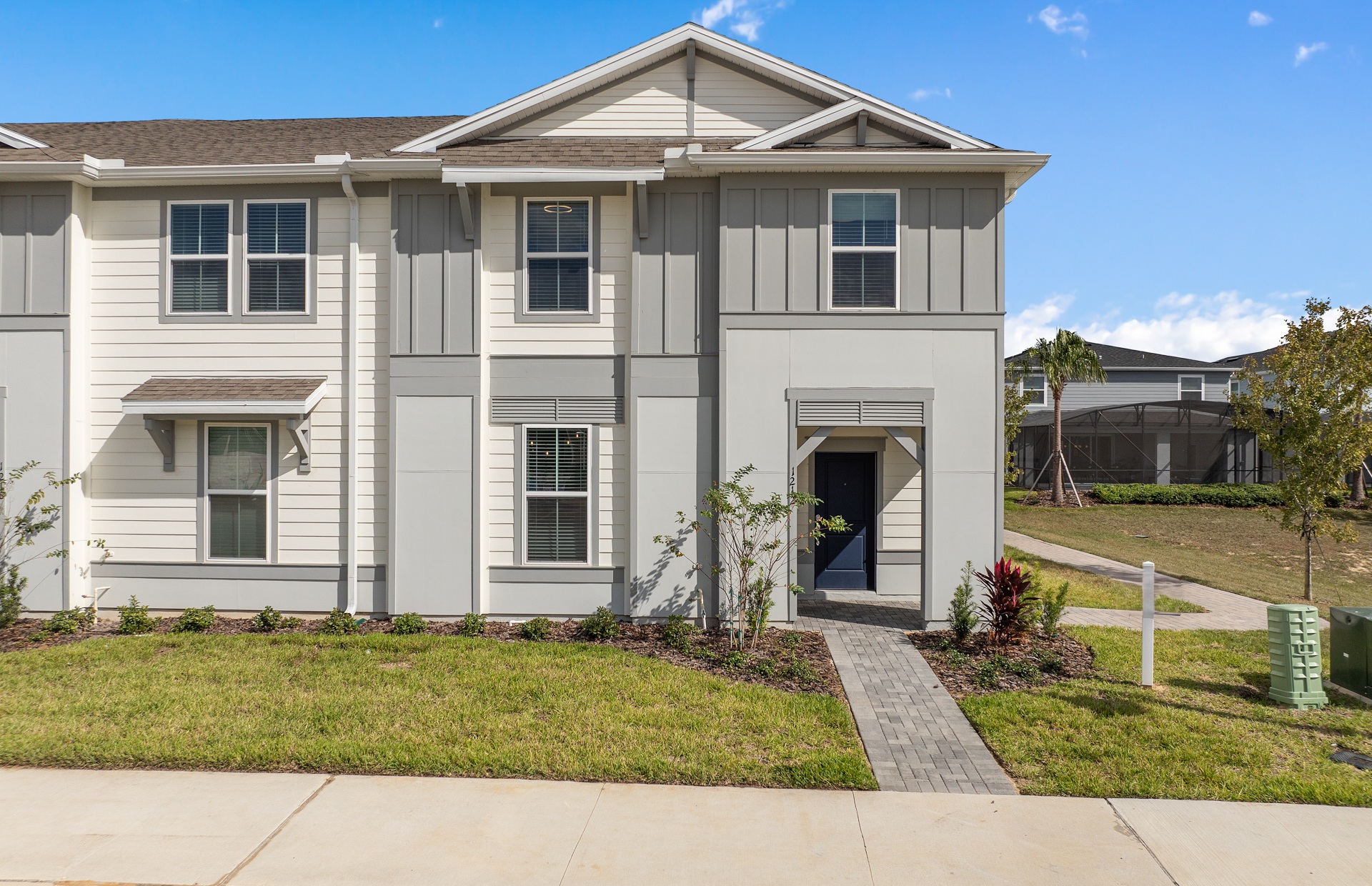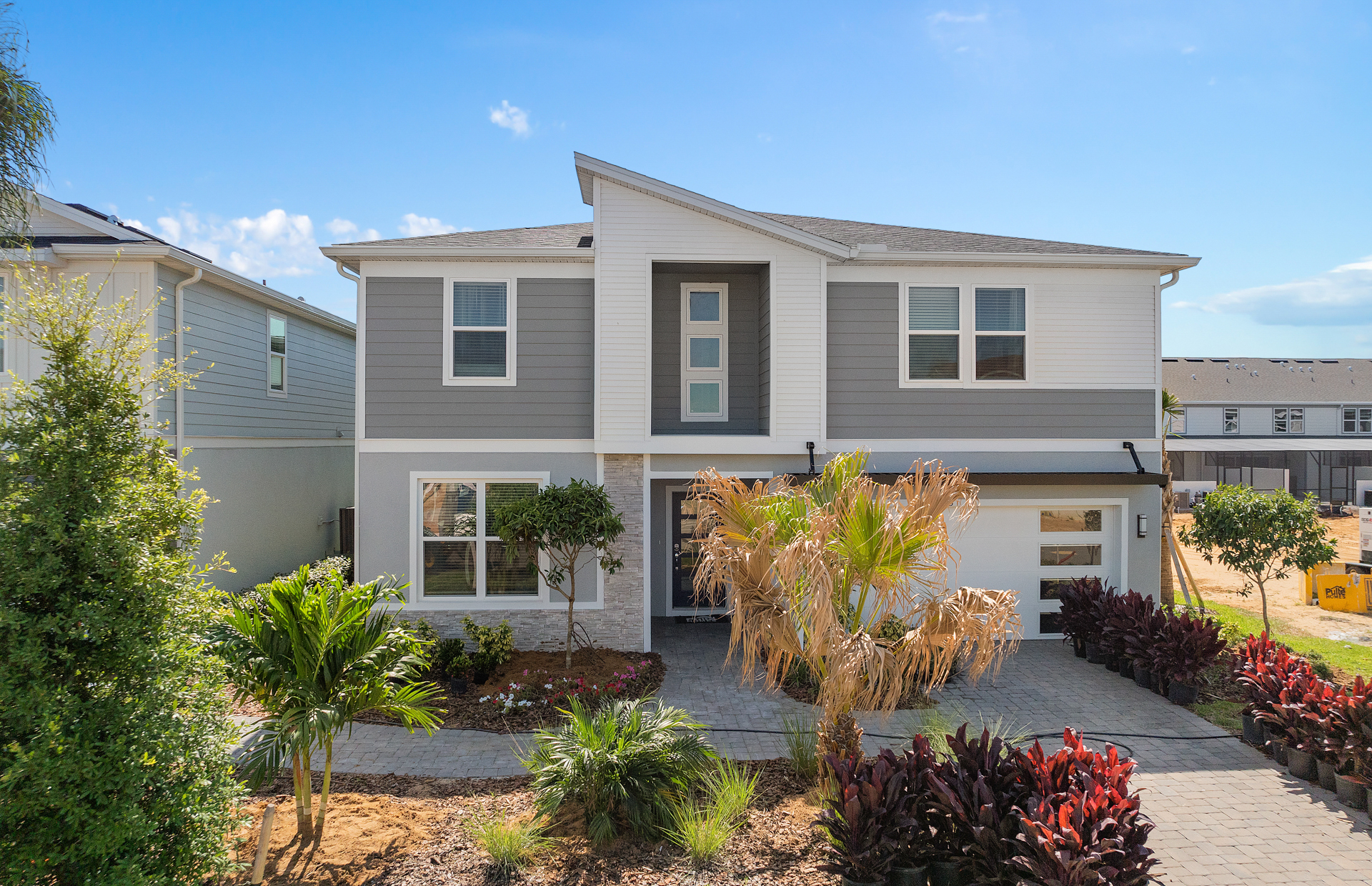
International investors interested in purchasing rental properties in the United States may encounter a financing option known as a DSCR loan. Unlike a traditional mortgage that focuses heavily on the borrower’s salary, employment, and personal debt, a DSCR loan primarily evaluates whether the property is expected to generate enough rental income to support its mortgage obligations.
This structure can be particularly relevant for foreign nationals who earn their income outside the United States, do not have a US credit history, or own businesses that make traditional income documentation more complex.
However, a DSCR loan is not automatically easier, cheaper, or appropriate for every investor. Qualification standards, down-payment requirements, interest rates, reserves, property eligibility, and documentation vary significantly by lender and loan program.
This guide explains how DSCR loans for foreign nationals work, how the ratio is calculated, which documents may be required, how these loans compare with other foreign national mortgage programs, and what international investors should evaluate before applying.
Quick answer: A foreign national DSCR loan allows a qualified international investor to finance a US rental property using the property’s expected rental income as a central part of the underwriting analysis. Personal income or US employment documentation may not be required under certain programs, but the borrower must still satisfy the lender’s requirements related to equity, assets, reserves, property condition, legal structure, and source of funds.
What Is a DSCR Loan?
DSCR stands for Debt Service Coverage Ratio. It is a financial measurement used to determine whether the income generated by a property is sufficient to cover its required debt payments.
DSCR loans are commonly associated with investment properties, including:
- Single-family rental homes;
- Townhomes;
- Approved condominiums;
- Two-to-four-unit residential properties;
- Long-term rental properties;
- Short-term rental properties accepted by the lender;
- Certain non-warrantable or specialized properties under eligible programs.
These loans are generally intended for non-owner-occupied investment properties. They are not normally designed to finance the borrower’s primary residence.
Traditional mortgage underwriting may analyze the borrower’s employment, tax returns, salary, personal debt, and US credit profile. DSCR underwriting places greater emphasis on the property’s ability to produce rental income.
How Is DSCR Calculated?
The general purpose of the DSCR calculation is to compare property income with debt obligations. However, the precise formula used can differ according to the lender and property type.
Traditional Real Estate DSCR Formula
In commercial real estate analysis, DSCR is commonly expressed as:
DSCR = Net Operating Income ÷ Annual Debt Service
Net Operating Income, or NOI, generally represents the property’s income after eligible operating expenses but before debt payments and certain other items.
Residential DSCR Loan Formula
Many residential DSCR mortgage programs use a simplified monthly calculation:
DSCR = Monthly Qualifying Rent ÷ Monthly Housing Expense
The monthly housing expense may include:
- Mortgage principal;
- Mortgage interest;
- Property taxes;
- Homeowners insurance;
- Homeowners association fees;
- Other property-related charges required by the program.
This combined expense is frequently described as PITIA: principal, interest, taxes, insurance, and association dues.
The lender determines which rental-income figure and expenses are included. The investor should request the lender’s exact calculation method before relying on an estimated DSCR.
DSCR Calculation Examples
Example 1: DSCR of 1.20
Assume the property has qualifying monthly rent of $3,000 and a monthly housing expense of $2,500.
$3,000 ÷ $2,500 = 1.20 DSCR
A ratio of 1.20 indicates that the qualifying rental income is equal to 120% of the monthly housing expense under this simplified calculation.
Example 2: DSCR of 1.00
Assume the property has qualifying monthly rent of $2,500 and a monthly housing expense of $2,500.
$2,500 ÷ $2,500 = 1.00 DSCR
A ratio of 1.00 indicates that the qualifying rent is equal to the calculated housing expense. There is no additional coverage within the ratio.
Example 3: DSCR Below 1.00
Assume the property has qualifying monthly rent of $2,250 and a monthly housing expense of $2,500.
$2,250 ÷ $2,500 = 0.90 DSCR
A ratio below 1.00 indicates that the qualifying rental income is lower than the calculated monthly housing expense.
Some lenders may reject a property with a ratio below their minimum requirement. Others may consider it with a larger down payment, additional reserves, different pricing, or another compensating factor. Program rules vary.
What Is Considered a Good DSCR?
A higher DSCR generally indicates that the property has more rental-income coverage relative to its debt obligation.
For example:
- DSCR above 1.00: qualifying rent exceeds the calculated debt expense;
- DSCR of 1.00: qualifying rent equals the calculated debt expense;
- DSCR below 1.00: qualifying rent is lower than the calculated debt expense.
There is no universal minimum DSCR that applies to every lender. A program may require a particular minimum ratio, allow a lower ratio with adjusted terms, or evaluate other factors in addition to the DSCR.
Investors should also understand that passing the lender’s DSCR test does not guarantee that the property will generate positive cash flow.
The lender’s calculation may not include every actual operating expense, such as:
- Property-management fees;
- Vacancy periods;
- Repairs and maintenance;
- Furniture replacement;
- Utilities paid by the owner;
- Cleaning expenses;
- Platform fees;
- Accounting costs;
- Local licensing expenses;
- Capital-expenditure reserves.
The investor must complete a separate cash-flow analysis using all realistic income and expenses.
How Does a Foreign National DSCR Loan Work?
A foreign national DSCR loan combines two lending concepts:
- A mortgage program created for borrowers who primarily live and earn income outside the United States;
- An underwriting method that focuses on the rental property’s expected cash flow.
Instead of qualifying primarily through US tax returns and employment documentation, the borrower may qualify based on the property, available assets, required equity, reserves, identification documents, and the lender’s rental analysis.
Depending on the program, the lender may not require:
- US employment;
- US wage statements;
- Traditional US income documentation;
- A long US credit history;
- Personal debt-to-income qualification.
This does not mean that the loan has no documentation or underwriting. The lender must still verify the borrower, the source of funds, the property, the collateral, the insurance, the transaction, and compliance with the applicable program.
Can a Foreign Investor Qualify Without US Credit?
Some foreign national DSCR programs accept borrowers who do not have an established US credit score. The lender may instead use alternative information or apply a program specifically designed for borrowers without domestic credit.
Depending on the lender, the underwriting may involve:
- A foreign credit report;
- Credit-reference letters;
- International bank statements;
- Housing-payment history;
- Evidence of assets and financial reserves;
- Additional equity in the property;
- A program that does not require a traditional credit score.
No-US-credit qualification does not mean that past financial problems will be ignored. The lender may still review bankruptcies, foreclosures, late mortgage payments, legal judgments, sanctions screening, identity verification, and other risk factors.
Documents Commonly Requested From Foreign Nationals
The required documentation depends on the lender, the borrower’s country of residence, the ownership structure, and the specific transaction.
Documents may include:
- A valid passport;
- A valid visa when required by the lender;
- Proof of the borrower’s foreign residential address;
- International bank statements;
- Evidence of the down payment and closing funds;
- Documentation explaining the source of funds;
- Financial-reserve statements;
- A foreign credit report or credit-reference letters;
- Purchase contract;
- Property appraisal;
- Market-rent analysis;
- Current lease agreement when applicable;
- Homeowners insurance documentation;
- Condominium or association documents when applicable;
- LLC or business-entity documents when applicable;
- An EIN or ITIN when required by the program or transaction.
Documents written in another language may require a certified or lender-approved translation. Currency amounts may also need to be converted into US dollars using the lender’s accepted method.
Is an ITIN Required for a DSCR Loan?
An Individual Taxpayer Identification Number, or ITIN, is a federal tax-processing number issued by the Internal Revenue Service to qualifying individuals who are not eligible for a Social Security number.
An ITIN is not automatically required for every foreign national DSCR loan. Some lenders may allow qualification without one, while others may require it before closing, for tax reporting, or for a particular program.
An ITIN does not provide:
- Immigration status;
- Employment authorization;
- A Social Security number;
- Automatic mortgage approval;
- Automatic eligibility for every tax benefit.
Investors should confirm the tax reason and correct timing before applying. Current information is available through the Internal Revenue Service ITIN guidance.
How Much Down Payment Is Required?
Foreign national DSCR loans generally require the investor to contribute a meaningful amount of equity. The precise requirement depends on the lender and transaction.
Factors affecting the down payment include:
- The property’s DSCR;
- The property type;
- The purchase price;
- The loan amount;
- The investor’s credit profile;
- Whether the investor has US credit;
- The investor’s experience with rental properties;
- The amount of financial reserves;
- The property’s short-term or long-term rental strategy;
- The ownership structure;
- The lender’s maximum loan-to-value ratio.
Understanding Loan-to-Value
Loan-to-value, or LTV, compares the loan amount with the property’s value.
LTV = Loan Amount ÷ Property Value
For example, assume an investor purchases a property for $500,000 and obtains a loan of $350,000.
$350,000 ÷ $500,000 = 70% LTV
In this simplified example, the investor would contribute $150,000 toward the price, which represents a 30% down payment, excluding closing costs and reserves.
This is only an illustration. The property’s appraised value, loan terms, required reserves, closing costs, and final contribution may change the amount the investor must provide.
What Financial Reserves May Be Required?
Financial reserves are funds the borrower retains after completing the down payment and paying closing costs.
The lender may express the reserve requirement as a certain number of months of property expenses or mortgage payments.
Reserve requirements may depend on:
- The DSCR;
- The loan-to-value ratio;
- The borrower’s credit profile;
- The number of properties owned;
- The property type;
- The rental strategy;
- The borrower’s previous investment experience;
- Whether the loan has an interest-only period;
- The lender’s risk guidelines.
Investors should maintain their own operating reserve even when the lender requires little or no reserve. Unexpected repairs, vacancies, insurance increases, association assessments, and maintenance can affect the property after closing.
How Is Rental Income Determined?
The lender decides which rental-income evidence is acceptable for the DSCR calculation.
Potential sources may include:
- A current lease agreement;
- A market-rent schedule prepared with the appraisal;
- Comparable rental properties;
- Historical property-management statements;
- Short-term rental revenue reports accepted by the lender;
- A lender-approved analysis of projected market rent.
The amount advertised by a seller, developer, property manager, or online platform may not be the amount the lender uses.
The lender may apply adjustments to:
- Seasonal income;
- Short-term rental revenue;
- Unverified leases;
- Rents above the local market;
- Vacant properties;
- Properties with limited rental history.
Before making an offer, the investor should ask which documentation the lender will use to establish qualifying rent.
Can DSCR Loans Be Used for Short-Term Rentals?
Some DSCR programs finance properties intended for short-term rentals. However, not every lender, property, city, county, condominium, or homeowners association permits this use.
The investor should verify:
- City and county short-term rental regulations;
- Zoning requirements;
- Local licenses and registrations;
- Homeowners association restrictions;
- Condominium rental restrictions;
- Minimum rental periods;
- Occupancy limits;
- Insurance requirements;
- The lender’s short-term rental policy.
A property can qualify financially but still be unsuitable for the intended rental strategy because of legal, community, insurance, or management restrictions.
DSCR Loan Versus a Traditional Foreign National Mortgage
Not every foreign national mortgage uses DSCR underwriting. Some programs evaluate the borrower’s foreign income, employment, business ownership, assets, and international credit.
DSCR Loan
A DSCR loan may be appropriate when:
- The property has sufficient qualifying rental income;
- The investor prefers property-based underwriting;
- US tax returns are unavailable;
- Foreign income is difficult to document under traditional standards;
- The property will be used primarily as an investment;
- The investor accepts the pricing and equity requirements.
Full-Document Foreign National Mortgage
A full-document foreign national mortgage may be appropriate when:
- The investor has strong and verifiable foreign income;
- The property’s DSCR is too low for a DSCR program;
- The lender accepts the investor’s international financial documentation;
- The borrower’s overall financial strength supports qualification;
- The intended property use fits the program requirements.
Which Option Is Better?
The better option depends on the investor and property. A DSCR loan may reduce the emphasis on personal income documentation, but it may involve different rates, fees, equity requirements, prepayment terms, and property restrictions.
Investors should compare complete loan estimates rather than focusing only on the interest rate.
Loan Terms International Investors Should Compare
Before selecting a DSCR lender, the investor should compare:
- Interest rate;
- Annual percentage rate when applicable;
- Fixed-rate or adjustable-rate structure;
- Amortization period;
- Interest-only period when offered;
- Required DSCR;
- Maximum loan-to-value ratio;
- Down-payment requirement;
- Financial reserves;
- Origination points;
- Underwriting and processing fees;
- Appraisal and valuation fees;
- Prepayment penalties;
- Balloon-payment provisions;
- Late-payment terms;
- Entity and personal-guarantee requirements;
- Short-term rental eligibility;
- Refinancing restrictions.
Review the Prepayment Penalty
Some investment-property and business-purpose loans include a prepayment penalty. This means the borrower may owe an additional amount if the loan is paid off, refinanced, or the property is sold during a specified period.
The investor should confirm:
- How long the penalty remains in effect;
- How the penalty is calculated;
- Whether partial principal payments are permitted;
- Whether the penalty applies after a property sale;
- Whether a no-prepayment-penalty option is available;
- How the alternative affects the interest rate and fees.
A loan with a lower interest rate may not be the best option when the investor expects to sell or refinance during the penalty period.
Using an LLC for a DSCR Loan
Some DSCR programs allow or require the investment property to be purchased through a US Limited Liability Company.
An LLC may assist with:
- Separating business and personal transactions;
- Organizing property income and expenses;
- Executing management and rental contracts;
- Managing investments involving multiple members;
- Building a portfolio under an organized structure.
However, an LLC does not automatically reduce taxes or eliminate personal liability. The lender may require a personal guarantee from one or more members.
The investor may also need:
- Articles of organization;
- An operating agreement;
- An Employer Identification Number;
- A certificate of good standing;
- Identification for each qualifying member;
- Information about the ownership percentage of each member;
- A US business bank account when required.
The legal and tax structure should be reviewed before the purchase contract is executed. Transferring ownership after closing may create lender, title, insurance, legal, or tax consequences.
Documentation Considerations by Country of Residence
The central DSCR analysis is based on the property and lender guidelines. However, the format of the borrower’s documents, banking system, currency, and source-of-funds records may differ by country.
Brazilian Investors
A Brazilian investor may need to organize passport identification, proof of address, Brazilian bank statements, evidence of available funds, business or asset documentation when requested, and records supporting the international transfer.
Documents issued in Portuguese may require an approved translation. Investors should also coordinate with qualified Brazilian and US professionals regarding tax reporting, currency transfers, and ownership structure.
Colombian Investors
A Colombian investor may be asked to provide passport identification, proof of foreign residence, Colombian banking records, source-of-funds documentation, and translated financial records when required.
The time needed to transfer funds and satisfy the lender’s verification procedures should be considered before establishing the closing date.
European Investors
European investors may need to provide passport identification, proof of address, bank statements, asset records, and documentation supporting the origin and international transfer of funds.
Document formats, currency conversion, privacy procedures, and translation requirements may differ among European countries.
Nationality alone does not determine approval. The lender evaluates the borrower and property according to its current eligibility, documentation, risk, and compliance standards.
Step-by-Step DSCR Loan Process for Foreign Nationals
- Define the investment strategy: determine the property type, market, budget, rental strategy, and expected holding period.
- Estimate the complete budget: include the down payment, closing costs, reserves, furniture, repairs, and operating capital.
- Identify qualified lenders: confirm that they currently accept foreign nationals, the selected property type, and the intended rental strategy.
- Request preliminary scenarios: compare loan amounts, estimated rates, fees, reserves, DSCR requirements, and prepayment terms.
- Prepare the documentation: organize identification, proof of address, bank statements, source-of-funds records, and entity documents.
- Obtain preliminary qualification: understand that initial qualification is not final loan approval.
- Select and analyze the property: evaluate rent, expenses, insurance, taxes, association fees, management, and resale demand.
- Confirm the estimated DSCR: use the lender’s method and acceptable rental-income documentation.
- Submit the purchase offer: coordinate financing deadlines, inspection periods, deposits, and closing requirements.
- Complete the appraisal and rental analysis: the lender confirms value, market rent, and property eligibility.
- Complete underwriting: provide any additional borrower, property, entity, insurance, title, or asset documentation.
- Review the final terms: verify the rate, payment, fees, reserves, prepayment penalty, closing amount, and legal borrower name.
- Transfer funds securely: independently confirm wire instructions with the authorized closing professional.
- Complete the closing: sign the documents remotely or in person according to the transaction requirements.
- Begin property operations: activate management, insurance, utilities, rent collection, accounting, maintenance, and tax compliance.
Risks of DSCR Financing
A DSCR loan can provide access to investment-property financing, but it also creates financial obligations and investment risks.
Potential risks include:
- Rental income being lower than projected;
- Vacancy periods;
- Unexpected repairs;
- Insurance-cost increases;
- Property-tax increases;
- Association-fee increases or special assessments;
- Short-term rental restrictions;
- Higher financing costs;
- Adjustable interest rates;
- Prepayment penalties;
- Currency-exchange fluctuations;
- Property-management failures;
- Difficulty refinancing or selling;
- Negative cash flow after complete operating expenses.
The lender’s approval does not guarantee investment performance, rental occupancy, appreciation, or profitability.
Common DSCR Loan Mistakes
- Calculating DSCR using an income figure the lender will not accept;
- Ignoring property taxes, insurance, and association fees;
- Assuming lender qualification means positive cash flow;
- Using projected short-term rental revenue as guaranteed income;
- Selecting a loan based only on the interest rate;
- Failing to review prepayment penalties;
- Opening an LLC without legal or tax advice;
- Transferring funds before verifying wire instructions;
- Choosing a property without confirming rental restrictions;
- Underestimating maintenance and vacancy reserves;
- Failing to coordinate international transfer timing;
- Purchasing without a qualified property manager;
- Assuming every lender uses the same DSCR calculation.
Frequently Asked Questions
Can a foreign national obtain a DSCR loan in the United States?
Some lenders offer DSCR programs for qualified foreign nationals purchasing eligible US investment properties. Requirements vary according to the lender, borrower, property, state, ownership structure, and transaction.
Do I need US income to qualify?
Certain DSCR programs do not require traditional US employment or personal-income documentation. Qualification may focus on property rental income, borrower assets, required equity, reserves, credit criteria, and other program requirements.
Do I need a US credit score?
Not always. Some foreign national programs accept borrowers without established US credit. The lender may request foreign credit records, alternative references, additional documentation, or a larger equity contribution.
What DSCR is required?
There is no universal minimum. Each lender establishes its own requirements. Some programs may require a ratio at or above a specified level, while others may consider lower ratios with adjusted terms.
How much down payment will I need?
The required down payment depends on the lender’s maximum LTV, the property, DSCR, borrower profile, reserves, credit history, and loan program. International investors should also budget separately for closing costs and post-closing reserves.
Can I use a DSCR loan for an Airbnb property?
Some programs accept eligible short-term rental properties. The investor must confirm lender eligibility, local regulations, zoning, licensing, homeowners association rules, insurance, and the documentation used to determine qualifying rent.
Does the lender use actual or projected rental income?
The lender may use a current lease, appraisal rent schedule, market-rent analysis, or accepted historical records. The specific method depends on the property and program.
Is an LLC required?
Not for every program. Some lenders allow individual ownership, while others permit or require a business entity. Legal and tax professionals should review the ownership structure before closing.
Does a DSCR loan guarantee that the property will be profitable?
No. The lender’s DSCR calculation is an underwriting measurement and may not include all operating expenses. Investors must perform an independent cash-flow, risk, and market analysis.
Can the closing be completed remotely?
Many foreign national transactions can be coordinated remotely, depending on the state, lender, title company, entity documents, and notarization requirements.
Explore DSCR Financing for US Rental Properties
DSCR financing may provide a path for international investors who want to purchase US rental properties without relying exclusively on traditional US income documentation.
The correct financing strategy should consider the property’s complete cash flow, lender requirements, ownership structure, taxes, insurance, management, reserves, and the investor’s long-term objective.
Buldora helps international investors compare US real estate opportunities, understand property-level financial scenarios, and coordinate with qualified professionals throughout the investment process.
Learn more about DSCR financing for foreign investors
Start your US real estate investment analysis with Buldora
About the Author
Raphaela Banks is Co-Founder and Global Real Estate Strategist at Buldora Invest. She develops strategies and educational content to help international investors understand real estate opportunities across the United States, Brazil, and Dubai.
This article is provided for general informational purposes only and does not constitute legal, tax, accounting, immigration, lending, financial, or investment advice. Loan programs, rates, qualification standards, down-payment requirements, and property eligibility can change without notice and vary by lender and jurisdiction. Consult qualified professionals before making a financing or investment decision.