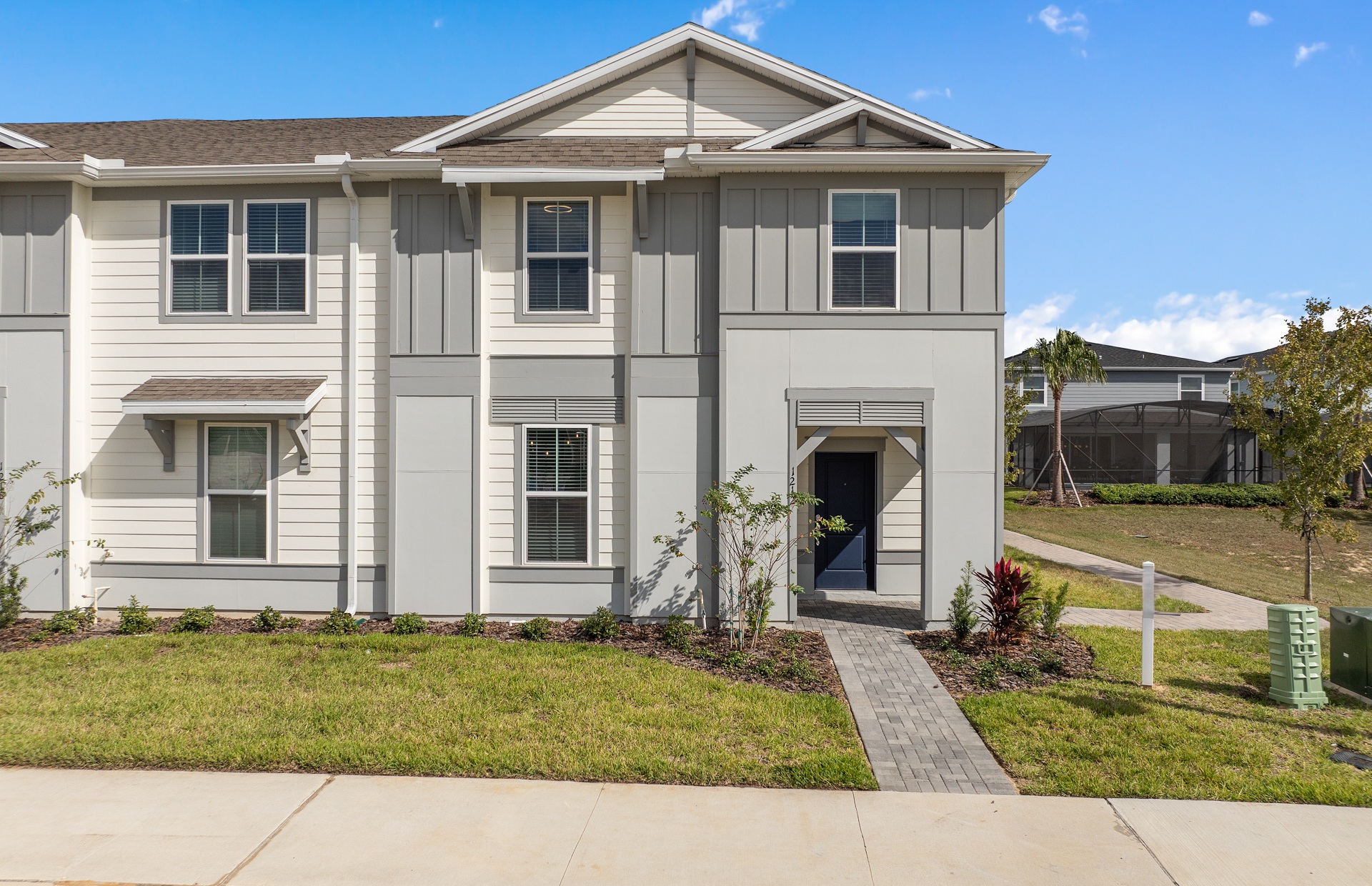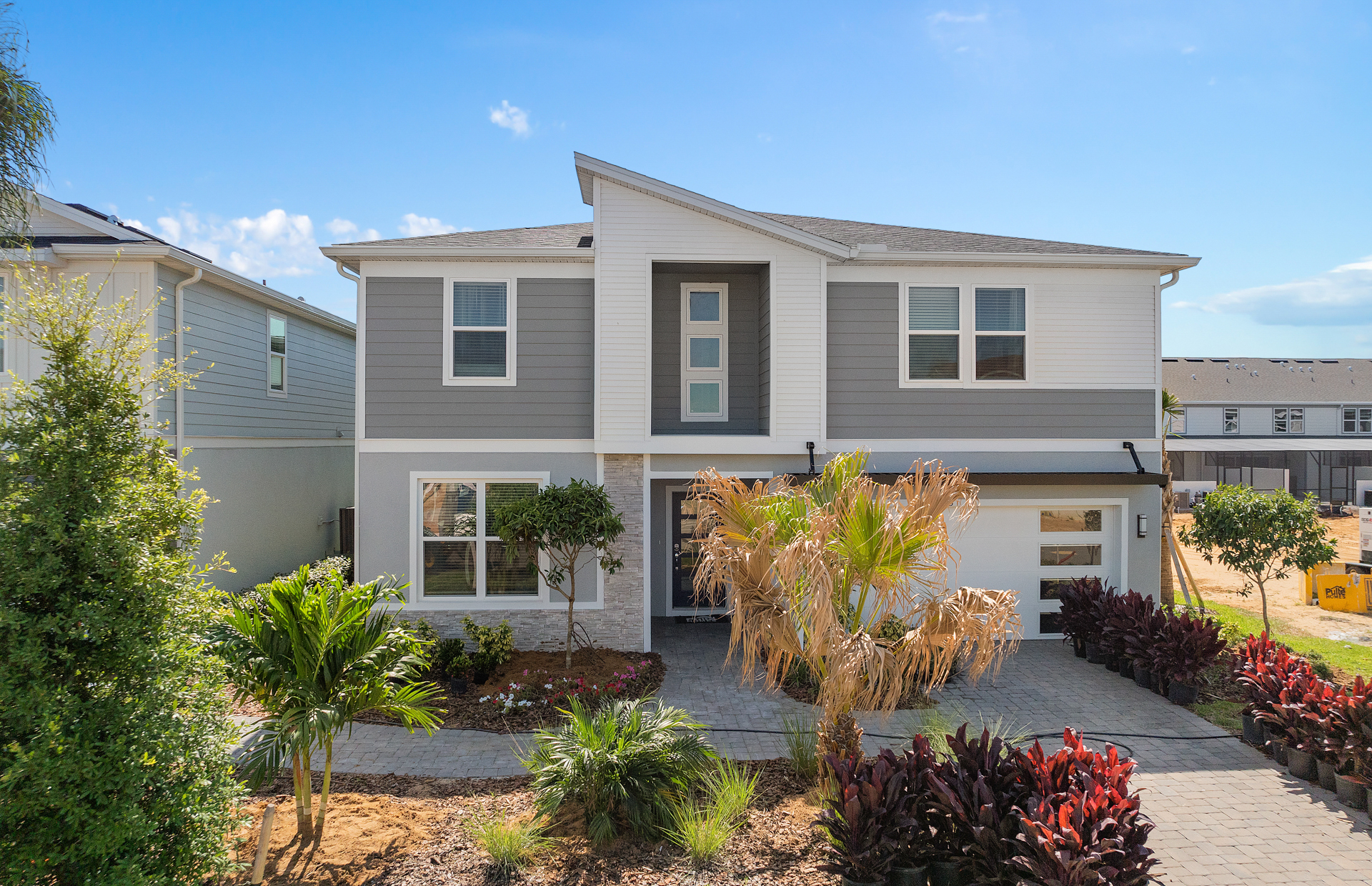
In Orlando, short-term rental (Airbnb and VRBO) generates gross revenue of USD 48,000 to USD 72,000 per year for 4- to 6-bedroom properties in resort communities, with 70% to 80% occupancy in the tourism corridors. Long-term rental delivers USD 18,000 to USD 26,000 annually with 12-month contracts, zero seasonal vacancy, and management costs 60% lower than the short-term model. The winning strategy depends entirely on your operational infrastructure and capital objective.
Short-term rental maximizes gross revenue. Long-term rental maximizes net margin. The investor without a professional local management structure should default to long-term to prevent yield erosion from unmonitored operational costs.
What Do the Real Return Numbers Look Like for Each Strategy?
True return analysis requires accounting for operational costs, not just gross revenue. In short-term rental, expenses include platform commissions (3% to 15%), local property management (20% to 30% of revenue), per-stay cleaning, utilities, and intensive maintenance cycles. Long-term rental carries substantially lower costs: 8% to 10% management fee, annual scheduled maintenance, and property tax, with no per-stay overhead.
The table below compares the real financial metrics of both models in Orlando for a USD 450,000 property in an STR-approved resort community:
| Metric | Short-Term Rental (Airbnb/VRBO) | Long-Term Rental (12 months) |
|---|---|---|
| Annual gross revenue | USD 48,000 to USD 72,000 | USD 18,000 to USD 26,000 |
| Operating expenses | USD 28,000 to USD 38,000 | USD 6,000 to USD 9,000 |
| Net operating income (NOI) | USD 20,000 to USD 34,000 | USD 12,000 to USD 17,000 |
| Estimated net cap rate | 4.4% to 7.5% | 2.7% to 3.8% |
| Vacancy rate | 20% to 30% (seasonal) | 0% to 5% (structural) |
| Management cost | 20% to 30% of revenue | 8% to 10% of revenue |
| Operational intensity | High (daily oversight) | Low (monthly oversight) |
| Furniture depreciation cycle | High (2 to 4 years) | Low (7 to 10 years) |
Which Orlando Communities Are Approved for Short-Term Rental?
Not all Orlando communities permit short-term rental. The City of Orlando and the surrounding tourism corridor municipalities (Kissimmee, Davenport, Clermont) each have distinct regulations. Resort communities along US-192 and US-27 near Walt Disney World are the most established and permissive markets for the Airbnb model.
The primary STR-approved resort communities include:
- Champions Gate Resort: 5 miles from Disney World, integrated management, cap rate of 5% to 7%
- Solterra Resort: Davenport, private pool units, average 76% occupancy rate
- Windsor at Westside: Kissimmee, gated community with full resort amenities
- Reunion Resort: Davenport, golf course, strong demand from corporate and premium family groups
- Storey Lake Resort: Kissimmee, newer inventory, lower entry price, high appreciation potential
How Does Remote Management Work for Each Model?
Short-Term Rental Management Process (5 Steps):
- VRMA-certified property manager contract: Certified managers charge 20% to 30% of gross revenue and assume full operational responsibility.
- Multi-channel listing: Simultaneous distribution across Airbnb, VRBO, Booking.com, and direct booking channels.
- Dynamic pricing automation: Tools like Pricelabs and Beyond automatically adjust rates for seasonality and local events.
- Remote financial oversight: Monthly reports, bank transfers, and reconciliation via the manager's platform.
- Tax compliance: Tourist Development Tax collection (6% to 7.5%) and ITIN filing for foreign investors.
Long-Term Rental Management Process (4 Steps):
- Residential property manager contract: 8% to 10% of monthly rent, tenant screening and collections included.
- Tenant screening: Credit check, payment history verification, employment verification.
- Scheduled maintenance program: Semi-annual inspections and a reserve fund of USD 200 to USD 400 per month.
- Annual renewal or vacancy management: 60-day notice for non-renewal and annual rent adjustment repricing.
What Are the Real Risks of Each Strategy?
Short-Term Rental - Key Risks:
- Municipal regulatory risk: The City of Orlando has restricted new STR licenses over the past 3 years, and other municipalities are tightening regulations.
- Pronounced seasonality: July to August and December to January are peak periods; February to March and September are soft periods with 40% occupancy declines.
- Accelerated property wear: High-turnover maintenance costs and furniture replacement reduce NOI in high-rotation years.
- Platform dependency: Algorithm or policy changes at Airbnb can materially impact visibility and occupancy.
Long-Term Rental - Key Risks:
- Tenant default: Florida eviction proceedings take an average of 30 to 90 days.
- Property damage: Long-term tenants can cause damage not fully covered by the security deposit.
- Reduced liquidity on exit: A property with an active tenant lease has lower resale liquidity than vacant inventory.
FAQ - Frequently Asked Questions
Do I need an ITIN to declare rental income in the United States?
Yes. Foreign investors must obtain an ITIN (Individual Taxpayer Identification Number) to declare rental income with the IRS. The process takes 6 to 10 weeks and can be completed through a Certifying Acceptance Agent without traveling to the United States.
Is it possible to combine both strategies in the same property?
Only in STR-approved communities. Some investors adopt a hybrid model: 9 months of short-term rental during high and shoulder seasons, and 3 months of medium-term rental during the weakest occupancy periods, balancing revenue and stability.
Which investor profile fits each strategy best?
Short-term rental is ideal for investors with capital to build a management infrastructure and tolerance for income variability. Long-term rental is ideal for those seeking predictable passive income with minimal operational involvement, the typical portfolio dollarization model for international investors living outside the United States.
"The most common error we see is clients chasing gross revenue. What matters for portfolio dollarization is not how much comes in; it is how much remains after tax, management, and physical depreciation. We model the full financial picture before recommending any specific property." - Anthony Banks, co-founder and systems architect at Buldora Invest
Buldora Verdict: Which Strategy to Choose?
For the investor seeking to maximize portfolio dollarization with minimal operational involvement, long-term rental is the dominant strategy. Net NOI of USD 12,000 to USD 17,000 with low operational risk outperforms the real cap rate of most short-term rental properties without adequate professional management. For the investor with an established management infrastructure and a focus on maximizing gross revenue, short-term rental in an STR-approved resort community can achieve net NOI of USD 20,000 to USD 34,000, a meaningful delta. Buldora's curation process maps the right property to the right objective.