The U.S. Real Estate Opportunity in 2026
The United States continues to rank as the world's most attractive destination for cross-border real estate capital. In 2024, international buyers purchased approximately $42 billion in U.S. residential properties. The combination of dollar-denominated assets, rule of law, transparent title systems, and deep liquidity makes the U.S. market structurally superior to most emerging market alternatives.
For international investors, the challenge is not finding opportunity — it is building the operational infrastructure to execute efficiently and at scale. This guide covers the complete system.
Step 1: Establish Your Legal Structure Before You Buy
The single most important decision you will make as an international real estate investor is how to structure ownership. The wrong structure creates unnecessary tax exposure and legal liability. The right structure protects capital and optimizes returns across the investment lifecycle.
Why should international investors use an LLC to hold U.S. real estate?
A U.S. LLC (Limited Liability Company) provides three core advantages for international investors: liability isolation between properties, favorable pass-through tax treatment, and estate planning flexibility. Unlike direct foreign ownership, an LLC can hold multiple properties with each asset protected from claims against the others. For investors acquiring more than one property, a Delaware holding LLC with Florida operating LLCs is a common institutional structure.
What is an ITIN and why do international real estate investors need one?
An Individual Taxpayer Identification Number (ITIN) is issued by the IRS to individuals who are required to pay U.S. taxes but are not eligible for a Social Security Number. International investors purchasing U.S. property need an ITIN to file tax returns, report rental income, and comply with FIRPTA withholding requirements upon sale. An ITIN application (Form W-7) typically takes 6 to 11 weeks to process.
Step 2: Secure Your Financing Before You Select a Property
Many international investors approach this process backwards — finding a property first, then scrambling to arrange financing. Institutional investors do the opposite. Pre-qualifying for financing before property selection gives you negotiating power and eliminates execution risk.
What financing options are available for foreign national investors?
International investors who cannot document U.S. income through traditional means have access to three primary loan types. DSCR (Debt Service Coverage Ratio) loans qualify based on property rental income rather than personal income, making them ideal for investors without U.S. employment. Foreign national loans require 30-40% down payment and proof of assets abroad. Portfolio loans from private lenders offer the most flexibility but at higher rates. As of 2026, DSCR loan rates for foreign nationals typically range from 7.5% to 9.5% depending on property type, down payment, and credit profile.
Step 3: Select Markets Based on Fundamentals, Not Headlines
The most expensive mistake international investors make is selecting markets based on name recognition rather than economic fundamentals. Miami gets the headlines. Orlando, Tampa, and Jacksonville drive the returns.
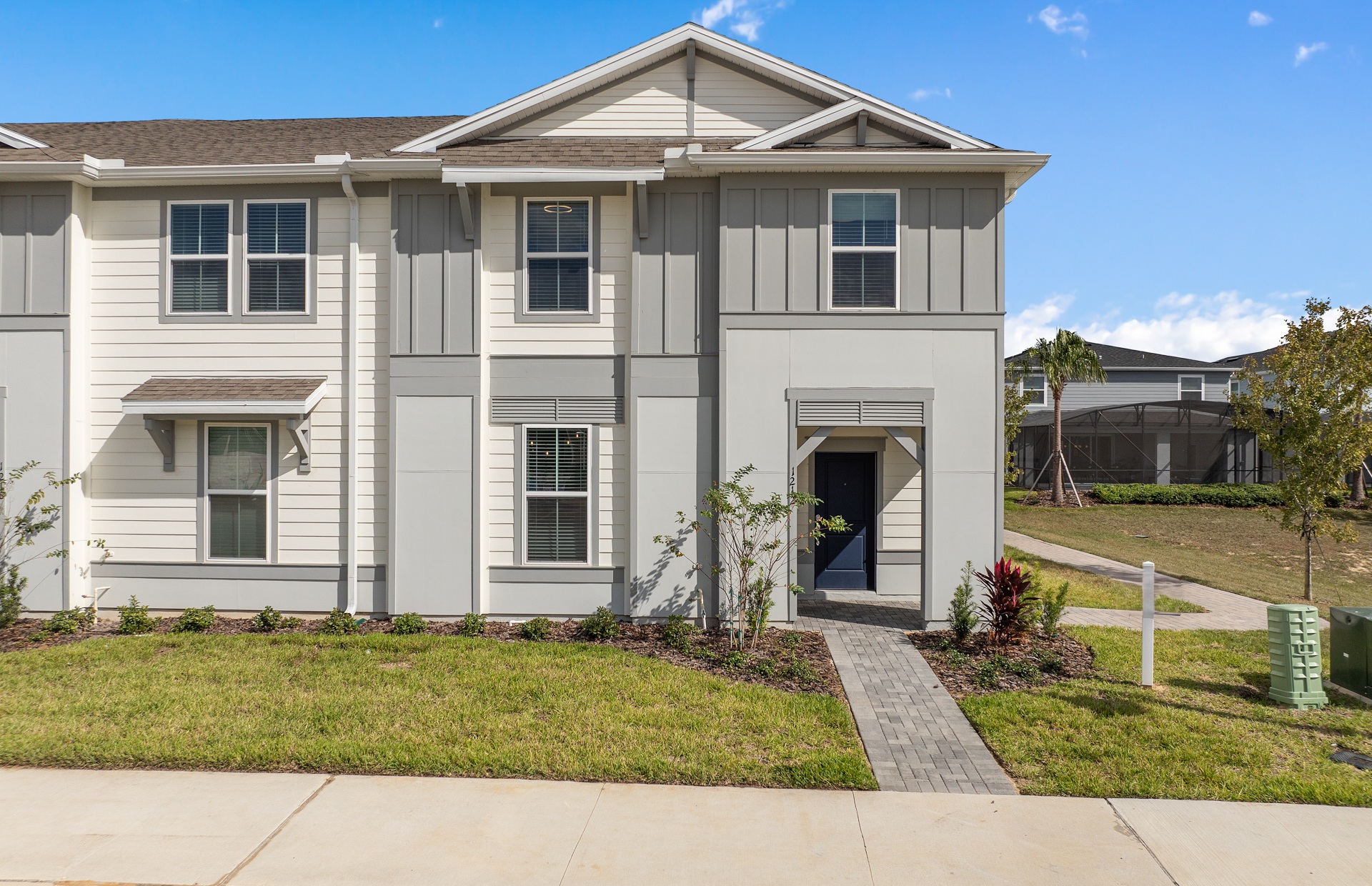
Florida remains the top destination for international real estate capital due to zero state income tax, population inflows exceeding 1,000 new residents per day, and a diversified economy anchored by tourism, technology, healthcare, and logistics. Within Florida, new construction in suburban growth corridors consistently outperforms resale in central urban cores for investors seeking yield.
Step 4: Evaluate Properties Using an Institutional Framework
Amateur investors evaluate properties on purchase price and gut feel. Professional investors evaluate using a standardized underwriting model. For a standard Florida investment property, the core metrics are: Gross Rent Multiplier (GRM), Net Operating Income (NOI), Cap Rate, and Cash-on-Cash Return.
For a single-family rental in the Orlando metro as of 2025, a well-underwritten deal should produce a cap rate of 5.5% to 7.5% and a cash-on-cash return of 4% to 8% depending on leverage. New construction properties in master-planned communities typically command premium rents, lower vacancy rates, and significantly lower maintenance costs than comparable resale inventory — a structural advantage that compounds over time.
Step 5: Build Your Local Operating Team
No international investor can manage U.S. real estate from abroad without a reliable local team. The minimum viable team includes: a licensed real estate agent with investor experience, a property management company with proven systems, a U.S.-based CPA with international tax expertise, and a real estate attorney for entity formation and contract review. Each of these relationships should be established before you close your first acquisition.
Step 6: Operate with a Platform, Not Spreadsheets
Scaling beyond one or two properties requires operational infrastructure. Tracking leads, managing tenant communications, monitoring property performance, and coordinating with your team cannot be done efficiently with spreadsheets and email. Modern real estate investment platforms centralize property management, CRM, financial reporting, and marketing in a single operational environment. This infrastructure is what separates investors who scale from those who stagnate at two or three properties.
What is the most important tool for managing multiple U.S. investment properties from abroad?
A centralized property management and investor dashboard that integrates financial reporting, tenant communications, maintenance tracking, and acquisition pipeline management. The ability to monitor your entire portfolio in real time from a single interface — regardless of your physical location — is the operational foundation of a scalable international real estate investment practice.