Orlando remains one of the most recognized United States real estate markets among Brazilian buyers.
The region offers homes for primary residence, vacation use, long-term rental, medium-term furnished rental and, in specifically authorized locations, short-term vacation rental.
However, the expression “a house in Orlando” can describe properties located across several cities and counties with very different prices, regulations, tenant profiles, insurance conditions and resale markets.
A house advertised as being in the Orlando area may legally be located in the City of Orlando, Kissimmee, Davenport, Haines City, Clermont, Winter Garden, Windermere, Sanford or another Central Florida community.
This distinction is essential because the legal address determines:
- Municipal and county regulations;
- Property taxes;
- Short-term rental permission;
- School districts;
- Insurance exposure;
- Commute times;
- Rental demand;
- Future resale competition.
This guide explains what Brazilian buyers need to know about homes in Orlando in 2026, including current market prices, property types, principal areas, tourism, rental strategies, ownership expenses, financing, remote purchases and the risks that must be evaluated before investing.
Direct answer: Brazilian buyers can generally acquire homes in the Orlando area for residence, vacation use or investment. In June 2026, the regional median price was approximately $416,308, but the median was higher for detached single-family homes and lower for condos and townhouses. The correct property depends on the buyer’s objective, complete budget, exact location, rental permission, insurance, property taxes, association expenses and long-term plan.
Orlando property does not guarantee appreciation, rental income, occupancy, financing approval, immigration benefits or investment profit.
Can Brazilians Buy Homes in Orlando?
Brazilian citizens can generally purchase residential real estate in the Orlando area even when they do not possess:
- U.S. citizenship;
- A Green Card;
- Permanent residency;
- A Social Security number;
- U.S. employment authorization.
A purchase may be completed individually or through an eligible legal entity, depending on the financing, tax, liability and estate-planning analysis.
The transaction may require:
- A valid passport;
- Proof of address;
- Tax-residency information;
- Source-of-funds documentation;
- Bank statements;
- Loan documents when financing is used;
- Entity documents when purchasing through an LLC or another structure;
- An ITIN or EIN when applicable.
Property ownership and immigration status are separate matters.
Buying a home does not automatically provide a visa, residency, employment authorization, a Green Card or citizenship.
Orlando Real Estate Market Snapshot for 2026
The Orlando Regional REALTOR® Association reported the following market indicators for June 2026:
- Overall median home price: $416,308;
- Single-family home median price: $451,922;
- Condo and townhouse median price: $301,057;
- Total available inventory: 11,924 properties;
- Average time on market: 62 days;
- Months of housing supply: 4.1 months;
- New listings during June: 3,978;
- Total completed sales during June: 2,929.
Review the official Orlando Regional REALTOR® Association housing market report.
The data covers a broad Central Florida market and does not represent the price of every property or neighborhood.
The association’s current market reporting includes residential activity across Orange, Osceola, Lake, Seminole and Volusia counties.
What the 2026 Market Means for Buyers
Four months of available supply is below the six-month level commonly used as a reference for a balanced market.
This means Orlando cannot automatically be classified as a complete buyer’s market.
However, buyers in 2026 may have more time and negotiating possibilities than buyers experienced during the extremely competitive years of limited inventory.
The combination of approximately 62 days on market and nearly 12,000 available properties may create opportunities to negotiate:
- Purchase price;
- Seller-paid closing costs;
- Repair credits;
- Interest-rate buydowns;
- Home warranties;
- Furniture or appliances;
- Closing date;
- Contract contingencies.
Negotiation power depends on the specific listing.
A correctly priced property in a desirable location may still receive significant buyer attention, while an overpriced or poorly maintained property may remain available longer.
Why Orlando Remains Relevant to Brazilian Buyers
Orlando’s attraction is based on more than theme parks.
The broader region includes:
- Tourism and hospitality employment;
- Healthcare systems;
- Education and universities;
- Technology and simulation industries;
- Logistics and distribution;
- Construction and residential development;
- Aviation and airport-related activity;
- Long-term population and household demand.
Brazilian buyers may also value:
- Direct and connecting flights from Brazil;
- Portuguese-speaking service providers;
- Established Brazilian communities;
- Professional property-management companies;
- Availability of both new and existing homes;
- Several investment strategies within the same metropolitan region.
Tourism in Orlando
Visit Orlando reported that the destination received approximately 76.7 million visitors in 2025.
This included:
- Approximately 70.3 million domestic visitors;
- Approximately 6.3 million international visitors;
- Brazil among Orlando’s leading international visitor markets.
Review the official Visit Orlando tourism report.
Tourism can support hospitality employment and lodging demand, but statewide or regional visitor numbers do not guarantee that one house will be successful as a vacation rental.
Property-level results depend on:
- Legal short-term rental permission;
- Exact location;
- Competition;
- Property size;
- Community amenities;
- Nightly pricing;
- Seasonality;
- Guest reviews;
- Management quality;
- Complete operating expenses.
Brazilian Participation in the Florida Market
The 2025 Florida Realtors international buyer report recorded approximately:
- 16,400 Florida existing-home purchases by international buyers;
- $10.4 billion in international residential transaction volume;
- Brazil representing 7% of international buyers;
- Brazilian purchase volume of approximately $762 million;
- Orlando–Kissimmee–Sanford receiving 13% of Florida’s international purchases;
- 68% of international buyers intending to use the property for vacation, rental or both;
- 60% of international buyers paying entirely in cash.
Review the official Florida Realtors international buyer report.
These figures demonstrate meaningful international participation but do not establish a guaranteed return for Brazilian buyers.
How Much Does a Home in Orlando Cost in 2026?
The answer depends significantly on property type.
| Property Category | June 2026 Regional Median | Typical Buyer Consideration |
|---|---|---|
| Single-family home | $451,922 | More space, greater maintenance responsibility and broader owner-occupant demand |
| Condo or townhouse | $301,057 | Lower entry price, association expenses and possible rental restrictions |
| All residential property types | $416,308 | Broad market reference rather than a property-specific estimate |
The median is not the same as the average, lowest price or typical price in every community.
Homes may be priced materially above or below the median depending on:
- City and county;
- Neighborhood;
- Property type;
- Age and condition;
- Bedrooms and bathrooms;
- Lot size;
- School district;
- Community amenities;
- Rental permission;
- Flood and insurance conditions;
- Recent comparable sales.
For a dedicated analysis of the lower price segment, review Homes in Orlando Under $300K: Opportunities for Brazilian Investors.
Types of Homes Available to Brazilian Buyers
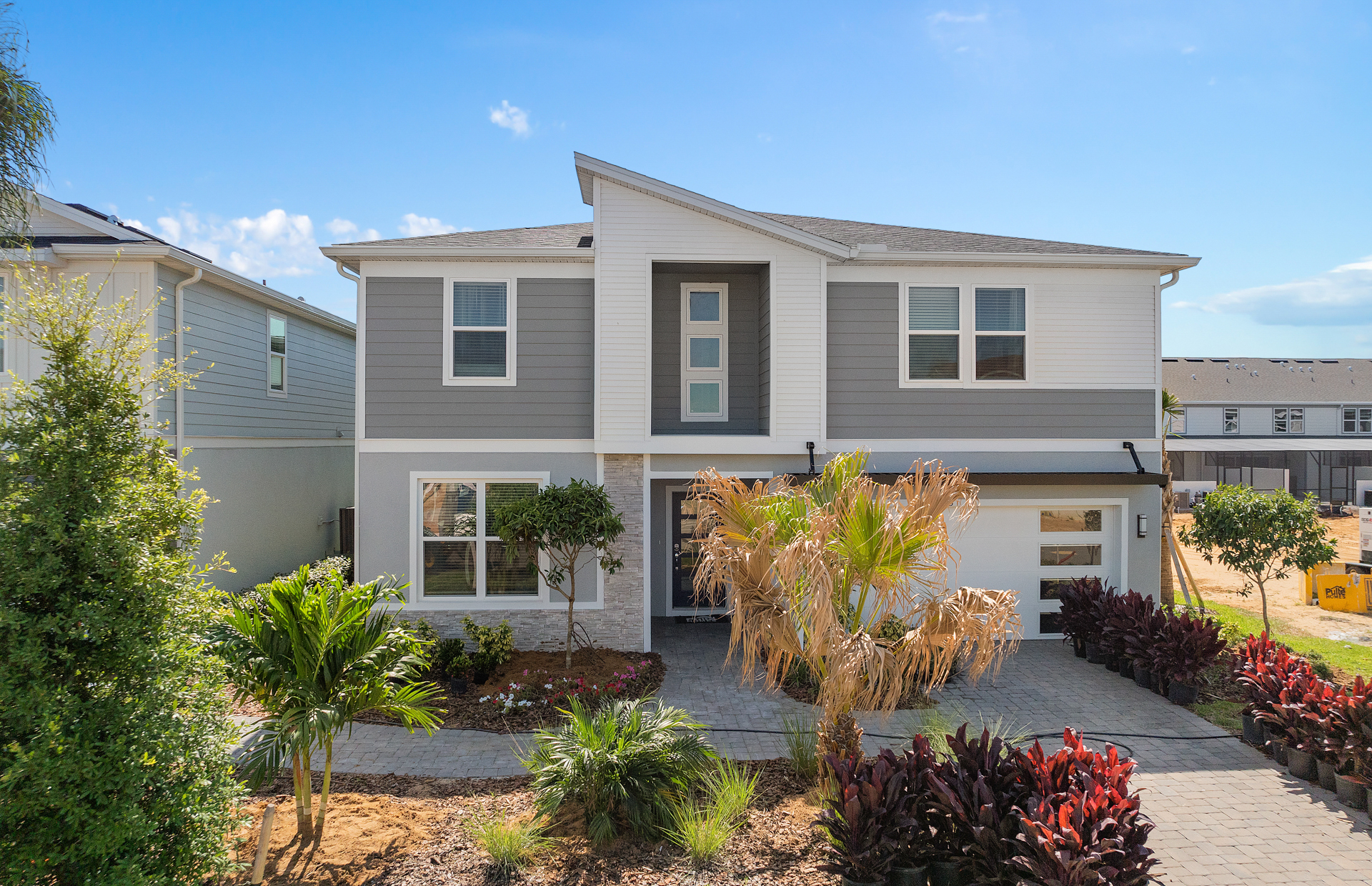
Single-Family Homes
A detached single-family house may offer:
- Greater privacy;
- Private yard;
- Garage;
- Broader appeal to families;
- Greater control over exterior maintenance;
- Potentially fewer association restrictions.
The owner may be responsible for:
- Roof;
- Exterior walls;
- Landscaping;
- Pool;
- Driveway;
- Complete structural insurance;
- All major systems.
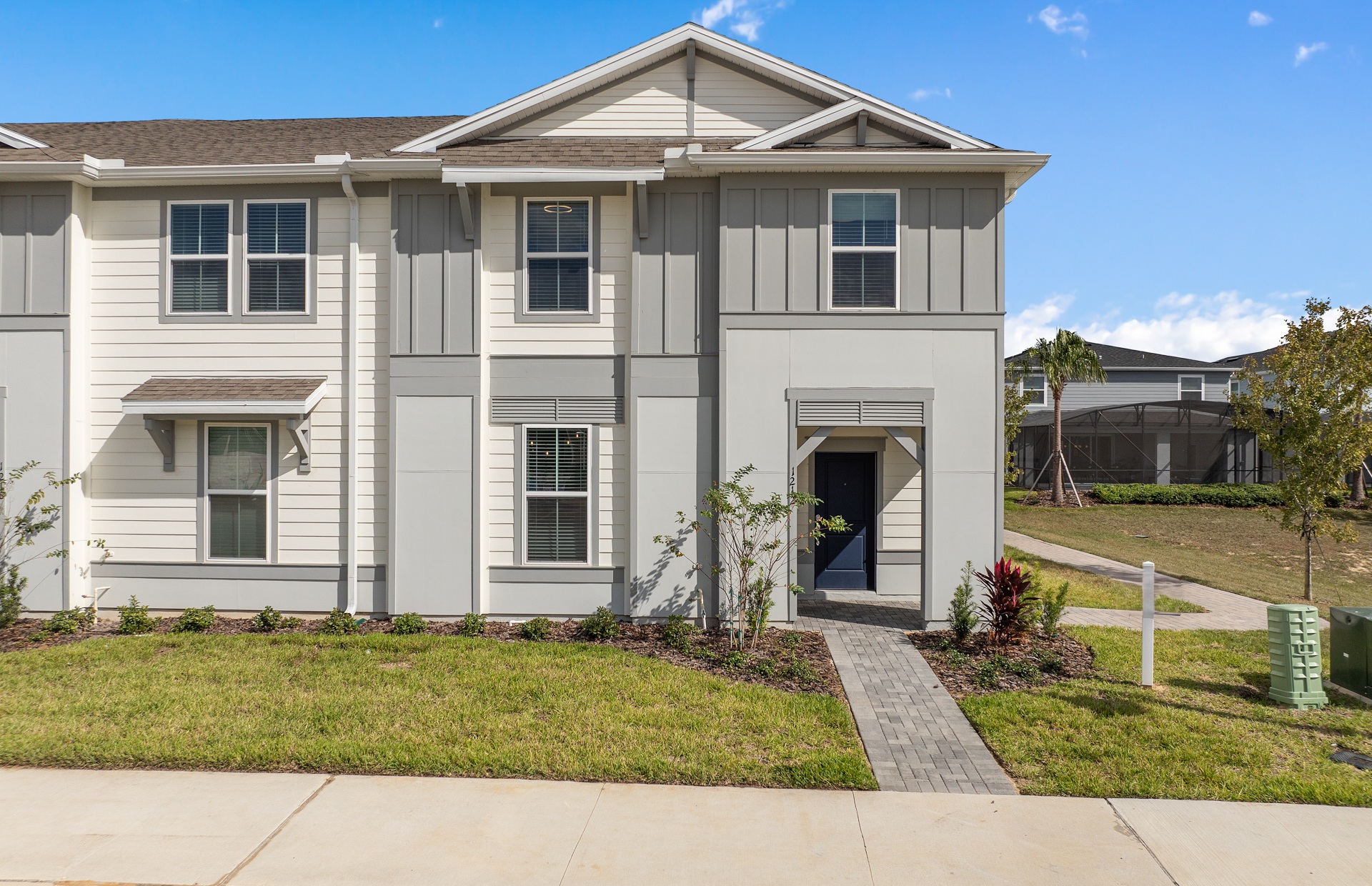
Townhouses and Villas
Townhouses may provide a middle position between a condo and a detached home.
Potential characteristics include:
- Private entrance;
- Two or more floors;
- Small private outdoor space;
- Community amenities;
- Association-maintained exterior elements;
- Lower purchase price than many detached homes.
The buyer must verify who is responsible for:
- Roof;
- Exterior walls;
- Insurance;
- Landscaping;
- Driveways;
- Shared infrastructure.
Condominiums
Condos may offer:
- Lower entry prices;
- Less exterior maintenance;
- Community amenities;
- Access to established locations;
- Simpler physical operation for an international owner.
Potential risks include:
- High association fees;
- Special assessments;
- Limited association reserves;
- Building insurance concerns;
- Rental limitations;
- Financing restrictions;
- Building-level litigation or structural issues.
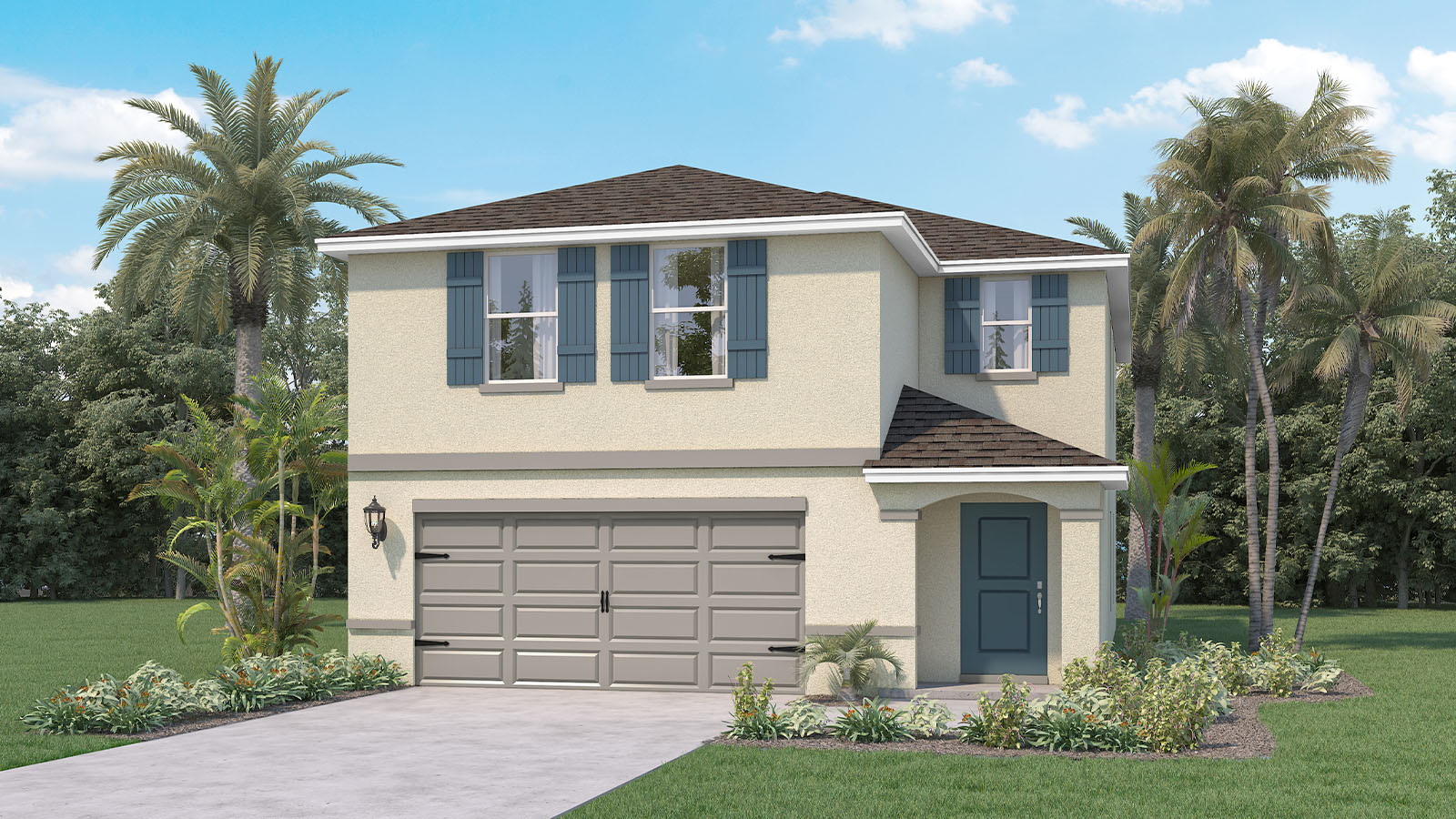
New-Construction Homes
New construction may offer:
- Modern design;
- Builder warranty;
- Energy-efficient systems;
- Limited immediate renovation;
- Builder financing or closing-cost incentives.
Buyers should verify:
- Final price after upgrades;
- Lot premium;
- Association fees;
- Community development district obligations;
- Estimated future property taxes;
- Completion schedule;
- Builder contract terms;
- Future phases competing with resale properties.
Vacation Homes
Vacation homes may be designed for:
- Personal use;
- Family travel;
- Guest accommodations;
- Short-term rental when permitted;
- Combination of owner use and rental.
Vacation-oriented communities may include:
- Clubhouses;
- Pools;
- Water parks;
- Fitness centers;
- Security gates;
- Shuttle or resort-style services.
These amenities are funded through association fees and may materially reduce net rental income.
Best Orlando Areas for Different Brazilian Buyer Profiles
No Orlando location is automatically best for every Brazilian buyer.
The appropriate area depends on whether the objective is residence, long-term rental, vacation use, short-term rental, premium ownership or a lower entry price.
City of Orlando
The legal City of Orlando includes urban, residential and employment-oriented neighborhoods.
It may be considered by buyers prioritizing:
- Access to central employment;
- Hospitals and universities;
- Established neighborhoods;
- Traditional long-term residential demand;
- Urban services and transportation.
Buyers must not assume that a property inside the City of Orlando can be rented as an entire short-term vacation home.
Lake Nona
Lake Nona may appeal to buyers seeking:
- Newer communities;
- Healthcare and medical employment;
- Access to Orlando International Airport;
- Modern residential development;
- Long-term owner-occupant demand.
Important considerations include:
- New-construction pricing;
- Association and community fees;
- Builder competition;
- Supported market rent;
- Distance from tourism-oriented areas.
Winter Garden and Horizon West
Winter Garden and Horizon West may appeal to families and buyers interested in newer suburban communities.
Potential characteristics include:
- New residential development;
- Community amenities;
- Access to western Orlando employment and attractions;
- Owner-occupant resale demand;
- Schools and family-oriented services.
Buyers should compare resale homes with competing builder inventory and incentives.
Windermere and Dr. Phillips
These areas are frequently associated with premium residential ownership, established communities and access to central and southwest Orlando.
They may appeal to buyers seeking:
- Primary or second-home use;
- Higher-end residential property;
- Established neighborhoods;
- Long-term resale demand;
- Access to restaurants, services and attractions.
Entry prices, association fees and maintenance expectations may be higher than in surrounding markets.
Kissimmee and Osceola County
Kissimmee includes traditional residential neighborhoods and tourism-oriented communities.
Potential strategies include:
- Long-term residential rental;
- Primary residence;
- Second home;
- Short-term rental in authorized locations;
- Vacation community ownership.
Not every Kissimmee address permits short-term rentals.
Osceola County advises buyers to confirm zoning, obtain the applicable state vacation-rental license and complete local business requirements.
Review the official Osceola County short-term rental guidance.
Davenport and ChampionsGate
Davenport and ChampionsGate are commonly included in Brazilian searches for Orlando property, although much of this area is located in Polk County.
Potential options include:
- New-construction homes;
- Townhouses;
- Vacation communities;
- Long-term residential properties;
- Resort-style developments.
Important considerations include:
- Distance from central Orlando;
- Traffic and commute time;
- New-construction competition;
- Association fees;
- Property-management coverage;
- Polk County taxes;
- Exact rental permission.
Haines City
Haines City may provide more accessible prices and newer residential inventory than premium Orange County communities.
Potential buyer profiles include:
- Long-term rental investors;
- Buyers seeking a newer detached home;
- Families relocating to Central Florida;
- Buyers prioritizing price and space over central location.
Evaluate:
- Commute time;
- Local employment and tenant demand;
- New housing supply;
- Association expenses;
- Property-management availability;
- Future resale competition.
Clermont
Clermont may appeal to buyers seeking suburban residential communities west of Orlando.
Potential considerations include:
- Long-term residential demand;
- Access to western Orange County;
- Distance from employment centers;
- Property age and condition;
- Association fees;
- Lake County property taxes;
- Rental regulations.
Sanford and Seminole County
Sanford and surrounding Seminole County communities may be considered by buyers focused on traditional residential ownership and long-term rentals.
Potential demand may come from:
- Local employment;
- Healthcare;
- Education;
- Transportation access;
- Residents working in northern Greater Orlando.
These markets are generally less dependent on theme-park tourism than Kissimmee or vacation-oriented Polk County communities.
Select the Area According to the Objective
| Buyer Objective | Areas Commonly Considered | Principal Analysis |
|---|---|---|
| Primary residence | Orlando, Lake Nona, Winter Garden, Windermere, Clermont, Seminole County | Commute, services, schools, insurance and monthly cost |
| Long-term rental | Orlando, Kissimmee, Sanford, Haines City, Davenport, Clermont | Tenant demand, rent, vacancy, taxes and management |
| Vacation rental | Authorized areas of Osceola and Polk counties | Zoning, HOA rules, occupancy, management and complete expenses |
| Premium second home | Windermere, Dr. Phillips, Lake Nona, Winter Garden | Personal use, maintenance, resale demand and carrying cost |
| Lower entry price | Selected condos, townhouses and surrounding cities | Association fees, condition, location and resale liquidity |
The table presents broad profiles rather than property recommendations.
Each address must be evaluated independently.
Short-Term Rental Rules in Orlando
Short-term rental permission varies across Central Florida.
Before purchasing, verify:
- Municipality;
- County;
- Zoning district;
- State licensing;
- Local business registration;
- Homeowners association rules;
- Insurance policy;
- Mortgage terms;
- Sales and lodging tax requirements.
City of Orlando Home Sharing
The City of Orlando’s residential home-sharing rules generally require:
- The resident to live on the property;
- The resident to be present while hosting guests;
- The rental portion to represent no more than 50% of the residence;
- Only one active booking at a time;
- Registration with the city;
- Association approval when applicable.
The city states that renting the entire property is not permitted under its standard residential home-sharing rules.
An entire-home short-term rental may be classified as a commercial dwelling unit and limited to appropriate zoning districts.
Review the official City of Orlando Home Sharing Registration rules.
Association Rules
An HOA or condominium association may impose stricter rules than the local government.
Restrictions may involve:
- Minimum lease term;
- Number of leases per year;
- Tenant approval;
- Guest registration;
- Occupancy limits;
- Parking;
- Advertising;
- Commercial activity.
Never rely only on an online listing that describes the property as “Airbnb approved.”
Review the governing documents and obtain written confirmation during due diligence.
Long-Term Rental Homes
A long-term rental generally uses a lease lasting six months, one year or longer.
Potential advantages include:
- More predictable scheduled income;
- Lower tenant turnover;
- Fewer cleaning and furnishing expenses;
- Reduced dependence on tourism;
- Simpler remote management.
Potential risks include:
- Tenant nonpayment;
- Vacancy;
- Property damage;
- Maintenance;
- Lease-enforcement expenses;
- Rent remaining fixed during the lease term.
Medium-Term Furnished Homes
A furnished home may be rented for several weeks or months to:
- Traveling professionals;
- Corporate employees;
- Relocating families;
- Seasonal residents;
- Students;
- Healthcare-related occupants;
- Families displaced by insurance claims.
The strategy may create more flexibility than an annual lease but generally requires:
- Furniture;
- Utilities;
- Internet;
- Cleaning;
- More frequent marketing;
- Replacement reserves.
Personal Use and Rental Use
Some Brazilian buyers want to use the home during vacations and rent it during other periods.
This may be possible when permitted by:
- Local zoning;
- Association documents;
- Insurance;
- Mortgage terms;
- Applicable licensing.
Personal use may:
- Reduce available rental nights;
- Reduce annual revenue;
- Increase furnishing expectations;
- Affect federal tax treatment;
- Create scheduling conflicts with high-demand dates.
The Purchase Price Is Not the Complete Budget
The complete acquisition budget may include:
- Purchase price or down payment;
- Earnest money deposit;
- Loan origination expenses;
- Appraisal;
- Inspection;
- Specialist inspections;
- Survey;
- Title search;
- Owner’s title insurance;
- Legal and tax advice;
- Entity formation when applicable;
- Insurance premium;
- Prepaid taxes and insurance;
- Association application or transfer fees;
- Repairs;
- Furniture;
- Currency conversion;
- International bank fees;
- Operating reserves.
Illustrative Purchase Budget
Assume a Brazilian buyer considers a $450,000 single-family home with financing requiring a 30% down payment.
| Category | Illustrative Amount |
|---|---|
| Purchase price | $450,000 |
| 30% down payment | $135,000 |
| Illustrative lender and closing costs | $18,000 |
| Inspection, appraisal, legal and entity costs | $6,000 |
| Initial repairs or preparation | $15,000 |
| Operating reserve | $24,000 |
| Illustrative initial capital | $198,000 |
This is an educational example rather than a standard lender requirement or transaction estimate.
Continuing Ownership Expenses
Recurring costs may include:
- Mortgage payments;
- Property taxes;
- Insurance;
- Association fees;
- Property management;
- Vacancy;
- Maintenance;
- Repairs;
- Landscaping;
- Pool service;
- Pest control;
- Utilities;
- Accounting and legal services;
- Licenses and rental taxes;
- Capital replacements.
Property Taxes
Florida property taxes are administered locally.
The future bill depends on:
- County;
- Municipality;
- Assessed value;
- Taxing districts;
- Available exemptions;
- Changes after ownership transfer.
The seller’s current tax bill may not represent the buyer’s future expense.
The seller may possess exemptions or assessment protections that will not transfer to the new owner.
Insurance
Insurance should be investigated during the contractual due-diligence period.
Request a written quote covering the intended use of the property.
Review:
- Annual premium;
- Hurricane or named-storm deductible;
- Windstorm coverage;
- Flood coverage;
- Roof age and condition;
- Electrical and plumbing eligibility;
- Rental-use coverage;
- Liability limits;
- Loss-of-rental-income coverage;
- Policy exclusions.
A property with an attractive price may become unsuitable after the actual insurance cost is identified.
Association Fees and Special Assessments
Association fees may fund:
- Community amenities;
- Exterior maintenance;
- Landscaping;
- Security;
- Private roads;
- Building insurance;
- Reserve funds;
- Shared utilities.
Review:
- Current budget;
- Financial statements;
- Reserve funding;
- Pending assessments;
- Approved future assessments;
- Insurance;
- Rental rules;
- Pending litigation;
- Recent meeting minutes.
How to Evaluate Rental Performance
Gross rent should not be presented as investment profit.
Rental analysis should include:
- Market rent supported by comparable properties;
- Vacancy;
- Property management;
- Property taxes;
- Insurance;
- Association fees;
- Maintenance;
- Repairs;
- Utilities;
- Financing;
- Capital reserves.
Illustrative Long-Term Rental Analysis
Assume a property produces $3,300 in scheduled monthly rent.
| Category | Illustrative Annual Amount |
|---|---|
| Scheduled gross rent | $39,600 |
| Vacancy allowance | -$1,980 |
| Property management | -$3,960 |
| Property taxes | -$6,400 |
| Insurance | -$4,500 |
| Association fees | -$2,400 |
| Maintenance and capital reserves | -$4,000 |
| Illustrative net operating income | $16,360 |
Mortgage payments, investor-specific taxes, major improvements and future sale costs would still need to be considered.
This example does not represent projected performance for a particular Orlando property.
Important Investment Metrics
Gross rental yield = annual gross rent ÷ purchase price × 100
Net operating income = gross operating income − operating expenses
Capitalization rate = net operating income ÷ property value × 100
Pre-tax cash flow = net operating income − financing payments
Cash-on-cash return = annual pre-tax cash flow ÷ total cash invested × 100
For a dedicated explanation of rental income, review Passive Income in U.S. Dollars Through Real Estate.
Cash Purchase or Financing?
Cash Purchase
Potential advantages include:
- No mortgage qualification;
- No monthly mortgage payment;
- No mortgage interest;
- Fewer lender-required documents;
- Potentially faster closing;
- Potentially stronger offer terms.
Potential limitations include:
- Greater concentration of capital;
- Reduced liquidity;
- Less capital available for repairs or diversification;
- Need to convert a larger amount into dollars;
- Opportunity cost.
Financed Purchase
Some lenders offer programs described as:
- Foreign national mortgages;
- DSCR loans;
- Portfolio loans;
- Business-purpose investment-property loans;
- Asset-based loans.
Potential risks include:
- Interest and lender expenses;
- Monthly payments during vacancy;
- Required reserves;
- Prepayment penalties;
- Balloon payments;
- Refinancing risk;
- Foreclosure after default.
The complete loan must be compared rather than only the interest rate.
Buying a New-Construction Home in 2026
Builder incentives may include:
- Seller-paid closing costs;
- Temporary mortgage-rate reductions;
- Permanent rate buydowns;
- Appliance packages;
- Design upgrades;
- Reduced lot premiums.
An incentive does not automatically make the property a better investment.
Compare:
- Final contract price;
- Resale comparables;
- Future builder inventory;
- Association fees;
- Property taxes after completion;
- Community development assessments;
- Rental demand;
- Expected resale competition.
The builder’s sales representative represents the builder’s interests.
The buyer should complete independent contract, inspection, financing and financial analysis.
Can the Purchase Be Completed From Brazil?
Many Orlando-area transactions can be coordinated remotely through:
- Virtual property tours;
- Electronic contracts;
- Online financing applications;
- Independent inspections;
- Electronic document review;
- International wire transfers;
- Remote or consular notarization when accepted;
- Courier delivery of original documents.
The procedure depends on:
- Lender;
- Title or closing company;
- Ownership structure;
- Document type;
- Notarization requirements;
- The buyer’s physical location.
Remote closing should be confirmed before signing the contract.
For the complete acquisition process, review Buying a House in Orlando: Complete Guide for Brazilian Buyers.
Protect the Transaction From Wire Fraud
Before sending a deposit or closing funds:
- Confirm the recipient’s legal name;
- Confirm the bank and account number;
- Call the title company using a previously verified telephone number;
- Do not rely only on emailed banking instructions;
- Question last-minute account changes;
- Confirm receipt immediately after the transfer.
Property Due Diligence
Independent Inspection
The inspection may evaluate visible conditions involving:
- Roof;
- Foundation and structure;
- Electrical system;
- Plumbing;
- Heating and air conditioning;
- Water intrusion;
- Windows and doors;
- Appliances;
- Safety conditions.
Specialist Inspections
Additional review may be appropriate for:
- Roof;
- Pool;
- Sewer line;
- Septic system;
- Mold;
- Pests;
- Foundation;
- Environmental concerns.
Title Review
A title search examines public records for:
- Legal ownership;
- Mortgages;
- Liens;
- Judgments;
- Easements;
- Recorded restrictions;
- Other claims.
Permit Review
Verify whether additions, bedrooms, garage conversions, pools and structural changes were properly permitted when required.
Unpermitted work can affect insurance, financing, appraisal, rental licensing and future resale.
Flood Review
Official flood-zone information can be reviewed through the FEMA Flood Map Service Center.
The buyer should also investigate drainage, elevation, prior claims and property-specific insurance requirements.
U.S. Federal Tax on Rental Income
Rental income from property located in the United States is generally U.S.-source income.
The Internal Revenue Service states that income from U.S. real property owned by a nonresident alien is generally subject to a 30% tax, or a lower applicable treaty rate, when it is not effectively connected with a U.S. trade or business.
This default treatment may apply to gross income without expense deductions.
A qualifying owner may elect under Internal Revenue Code Section 871(d) to treat the income as effectively connected income.
When the election and required filings are valid, eligible property expenses may generally be considered before federal income tax is calculated.
Review the official IRS guidance for nonresident owners of U.S. property.
FIRPTA When the Property Is Sold
When a foreign person disposes of a U.S. real property interest, FIRPTA withholding may apply.
The general withholding rate is commonly 15% of the amount realized, subject to exceptions and specialized procedures.
FIRPTA withholding is not necessarily the seller’s final federal income tax.
The seller generally files the applicable return, calculates the actual tax and claims credit for the amount withheld.
Review the official IRS FIRPTA Withholding guidance.
Brazilian Tax and Reporting Considerations
A buyer who remains a Brazilian tax resident may have obligations involving:
- Foreign real estate ownership;
- Ownership of a U.S. LLC or another entity;
- Foreign rental income;
- Capital gains;
- Foreign bank accounts;
- Taxes paid or withheld in the United States;
- Brazilian Capital Abroad reporting when applicable;
- Foreign controlled entity rules when applicable.
U.S. and Brazilian tax planning should be coordinated before purchasing the property.
Opportunities for Brazilian Buyers in 2026
Potential opportunities include:
- More inventory than during extremely competitive years;
- Properties remaining available longer;
- Seller-paid closing costs;
- Repair credits;
- Builder financing incentives;
- Choice among several property types;
- Possibility of comparing multiple Central Florida cities;
- Negotiation on properties that are incorrectly priced or require improvements.
These opportunities are property-specific and should not be interpreted as a market-wide discount.
Risks Brazilian Buyers Must Understand in 2026
- Interest rates and financing costs;
- Insurance premiums and deductibles;
- Property-tax changes after transfer;
- Association fees and special assessments;
- Large volumes of competing new construction;
- Short-term rental restrictions;
- Vacancy and lower-than-projected rent;
- Major property repairs;
- Currency movements;
- Tax obligations in two countries;
- Remote management risk;
- Future resale competition.
Complete 2026 Evaluation Checklist
- Define the objective: residence, second home, long-term rental or authorized vacation rental.
- Establish the complete budget: include purchase, closing, repairs and reserves.
- Confirm the legal location: verify city, county, parcel and zoning.
- Select the property type: house, townhouse, condo or new construction.
- Compare current market data: use property-type and location-specific comparisons.
- Verify rental permission: review local government, association, insurance and financing rules.
- Estimate market rent: use comparable properties rather than seller projections.
- Calculate net income: subtract every realistic expense.
- Obtain an insurance quote: complete this during due diligence.
- Estimate future property taxes: do not rely only on the seller’s current bill.
- Review association documents: examine fees, reserves, assessments, insurance and rental rules.
- Complete independent inspections: include specialists when necessary.
- Review permits and title: identify unapproved changes, liens and ownership issues.
- Compare cash and financing: analyze complete written costs and risks.
- Review the ownership structure: coordinate U.S. and Brazilian professionals.
- Maintain reserves: preserve funds for vacancy, repairs and insurance deductibles.
- Select local management: establish operations before closing.
- Plan the future sale: include brokerage, closing expenses, tax, FIRPTA and currency conversion.
Common Mistakes Brazilian Buyers Should Avoid
- Assuming every property marketed as Orlando is located in the City of Orlando;
- Selecting an area only because it is popular among Brazilians;
- Buying near Disney without confirming short-term rental permission;
- Comparing properties only by purchase price;
- Ignoring association fees and special assessments;
- Using the seller’s property-tax bill as the future estimate;
- Waiting until after the inspection period to investigate insurance;
- Relying only on builder or seller rental projections;
- Confusing gross rent with net income;
- Using all available liquidity at closing;
- Comparing financing only by interest rate;
- Ignoring prepayment penalties or balloon payments;
- Skipping an independent inspection;
- Ignoring unpermitted improvements;
- Selecting an LLC without cross-border tax analysis;
- Ignoring U.S. tax filings;
- Ignoring Brazilian tax and foreign-asset reporting;
- Sending funds using unverified wire instructions.
Frequently Asked Questions
Can Brazilians buy homes in Orlando?
Yes. Brazilian citizens can generally purchase Orlando-area property even without U.S. citizenship, a Green Card or permanent residency.
How much does a house in Orlando cost in 2026?
The regional median home price was approximately $416,308 in June 2026. The median for single-family homes was approximately $451,922, while condos and townhouses had a median of approximately $301,057.
Are there homes in Orlando below $300,000?
Yes, but options are more likely to include condos, townhouses, smaller homes, older properties or homes in surrounding Central Florida communities.
What is the best Orlando area for Brazilians?
There is no single best area. The correct location depends on whether the buyer wants to live in the property, rent it long term, use it during vacations or operate a legally permitted short-term rental.
Is Kissimmee part of Orlando?
Kissimmee is a separate city in Osceola County. It is frequently included in the broader Orlando real estate and tourism market.
Is Davenport part of Orlando?
Davenport is a separate city located in Polk County. It is marketed as part of the Orlando tourism area because of its access to attractions and vacation communities.
Is Haines City a good alternative to Orlando?
Haines City may offer more accessible entry prices and newer inventory. Buyers should evaluate commute time, tenant demand, new-construction supply, association fees and resale competition.
Is Lake Nona appropriate for investment?
Lake Nona may appeal to buyers seeking newer communities and access to healthcare, education and airport-related employment. Prices, association fees and supported rental income must be evaluated.
Can any Orlando home be rented through Airbnb?
No. Permission depends on the exact city, county, zoning, association, insurance policy, licenses and mortgage documents.
Can an entire house be rented short term inside the City of Orlando?
Generally not under the city’s standard residential home-sharing rules. Entire-home rental requires an appropriate classification and zoning.
Is a condo or townhouse better for Brazilian buyers?
Neither is universally better. Condos may reduce exterior maintenance, while townhouses may offer greater residential appeal. Association finances, fees, insurance, rental rules and resale demand determine the result.
Is new construction safer than an existing home?
New construction may reduce immediate renovation requirements but can involve builder contracts, lot premiums, future tax increases, community fees and competition from later phases.
Can Brazilians finance Orlando property?
Some lenders offer foreign national, DSCR, portfolio and business-purpose mortgage programs. Requirements, down payments, rates, fees and reserves vary.
Can the purchase be completed from Brazil?
Many transactions can be coordinated remotely through virtual tours, electronic contracts, independent inspections, international transfers and accepted notarization procedures.
Is a U.S. bank account required?
It may not be mandatory for every transaction, but it usually simplifies mortgage payments, rental collection, expenses, reserves and bookkeeping.
What expenses exist beyond the purchase price?
Buyers should include closing costs, financing fees, inspections, insurance, property taxes, association fees, repairs, management and operating reserves.
Do Brazilian owners pay U.S. tax on rent?
Yes. U.S. rental income may create federal tax and filing obligations. The treatment depends on the owner’s tax status, structure, elections, income and documented expenses.
Does the property need to be reported in Brazil?
A Brazilian tax resident may have obligations involving foreign property, rental income, entities, bank accounts, gains and taxes paid outside Brazil.
What happens when a Brazilian owner sells?
The sale may create federal tax, FIRPTA withholding, sale expenses, Brazilian tax reporting and currency-conversion considerations.
Is 2026 a good year to buy a home in Orlando?
2026 may provide opportunities through greater choice, longer marketing periods and seller or builder concessions. The decision must still be based on the specific property, price, expenses, objective and holding period.
What is the first step?
The first step is defining how the property will be used and establishing the complete budget before selecting a city, community or listing.
Choose the Orlando Property That Matches Your Objective
Orlando continues to provide several possibilities for Brazilian buyers in 2026.
The region includes premium residential neighborhoods, new suburban communities, traditional rental markets, vacation developments and more accessible surrounding cities.
The correct decision cannot be made using the word “Orlando” alone.
The buyer must identify:
- The exact city and county;
- The property type;
- The intended use;
- The complete acquisition cost;
- Property taxes and insurance;
- Association expenses;
- Rental permission;
- Realistic income;
- Property condition;
- Management requirements;
- The future resale market.
The best Orlando home is not necessarily the property closest to the theme parks, the newest house or the listing with the highest advertised rental projection.
It is the property that matches the buyer’s objective and remains financially manageable after realistic costs, taxes, risks and conservative scenarios are included.
For the complete purchase process, review Buying a House in Orlando: Complete Guide for Brazilian Buyers.
For properties in the lower price segment, review Homes in Orlando Under $300K.
For a broader Florida comparison, review Florida Real Estate for Brazilian Investors: Is It Worth It?.
Buldora helps Brazilian buyers compare Orlando-area communities, understand current market conditions, calculate complete ownership costs and coordinate the transaction with qualified real estate, legal, tax, lending, insurance, inspection and property-management professionals.
Start your Orlando property analysis with Buldora
About the Author
Raphaela Banks is Co-Founder and Global Real Estate Strategist at Buldora Invest. She develops strategies and educational content to help international investors understand real estate opportunities in the United States, Brazil and Dubai.
Sources and References
This article was researched using official Orlando housing reports, Florida international buyer data, tourism information, local government rental regulations, federal tax guidance and Brazilian foreign-asset resources. Prices, inventory, financing, insurance, taxes and rental rules may change after publication.
- Orlando Regional REALTOR® Association — Orlando Housing Market Narrative, June 2026
- Orlando Regional REALTOR® Association — Housing Market Reports
- Florida Realtors — 2025 Profile of International Residential Transactions in Florida
- Visit Orlando — Orlando Visitor Volume for 2025
- City of Orlando — Home Sharing Registration and Short-Term Rental Rules
- Osceola County — Short-Term Rental Planned Development
- Federal Emergency Management Agency — Flood Map Service Center
- Internal Revenue Service — Nonresident Aliens and U.S. Real Property
- Internal Revenue Service — Publication 527, Residential Rental Property
- Internal Revenue Service — FIRPTA Withholding
- Consumer Financial Protection Bureau — Loan Estimate
- Consumer Financial Protection Bureau — Home Inspection
- Brazilian Federal Revenue Service — Foreign Real Estate and Other Assets
- Brazilian Federal Revenue Service — Carnê-Leão
- Central Bank of Brazil — Brazilian Capital Abroad
This article is provided for general informational and educational purposes only. It does not constitute legal, tax, accounting, immigration, banking, currency, lending, insurance, financial, property-management or investment advice. Orlando real estate does not guarantee appreciation, rental income, occupancy, financing approval or profit. Requirements and results vary according to the buyer, tax residence, city, county, property, association, lender, ownership structure, insurance and intended use. Brazilian buyers should consult qualified professionals in the United States and Brazil before purchasing, financing, structuring, renting or selling property.